
Germany is one of the easiest countries in Europe to explore on your own. Trains link almost every city worth visiting, English is widely spoken in tourist areas, and the culture rewards travelers who like to set their own pace. Still, not every city delivers the same experience when you're traveling alone. Some feel walkable and welcoming from the first hour, while others make more sense as a day trip than a base. This guide covers the best cities for solo travel Germany has to offer, what each one does well, and how to plan the practical side so your trip runs smoothly from the moment you land.
Whether you're a first-timer looking for an easy introduction or a seasoned traveler hunting for somewhere new, the cities below balance safety, character, and convenience. You'll find culture-packed harbor towns, compact university cities, and Rhine-side neighborhoods with welcoming cafés and plenty of places to explore.
What Makes a German City Good for Traveling Alone
A great solo destination isn't just about famous sights. When you're on your own, a few practical qualities shape the whole trip.
Walkability. A compact old town or riverfront means you can explore without planning every move. You'll also feel more confident after dark when your hotel is a short walk from dinner.
Easy social options. Free walking tours, food markets, cafés, and hostels with common rooms make it simple to talk to people when you want to, and just as easy to keep to yourself when you don't.
Reliable connections. Cities with a well-served airport and a central train station let you add day trips without hauling luggage around the country.
A relaxed street atmosphere. Germany's larger cities have the usual pockets that feel rougher late at night, usually around main train stations. The best cities to travel alone in Germany are the ones where the areas you'll actually spend time in stay lively and well lit into the evening.
Every city in this guide checks most of these boxes. Several of them sit within an hour of each other, so you can combine two or three into one trip.
Best Cities for Solo Travel Germany: Where to Go
Berlin and Munich tend to dominate solo travel lists, but many of the most rewarding cities in Germany for traveling alone are in the north and along the Rhine. They're easier to navigate, less overwhelming on a first visit, and close enough together to link by train. Here are the destinations worth building a trip around.
Hamburg
Hamburg is Germany's second-largest city, yet it rarely feels hectic. Water shapes everything here, from the Alster lakes in the center to the working harbor on the Elbe. Spend a morning in the Speicherstadt, the red-brick warehouse district listed as a UNESCO World Heritage Site, then visit the International Maritime Museum to explore the city's seafaring history. Miniatur Wunderland, the enormous model railway exhibition, is one of the most popular attractions in the country and a fun solo stop on a rainy afternoon.
A local trick: the HADAG harbor ferries are part of the public transit network, so a regular ticket gets you a cheap boat ride past the docks. If you're up early on a Sunday, the Fischmarkt in Altona is a lively scene of market stalls and breakfast stands. For a quieter evening, explore the waterfront promenades and well-trafficked central neighborhoods.
Hamburg Airport sits only a few miles north of the city center, so arranging private airport transportation straight to your hotel is a smart move if you land late, carry heavy bags, or simply want a calm first hour in a new country.
Cologne
Cologne is friendly, chatty, and famously informal, which makes it one of the best cities for solo travelers who want company without effort. The Gothic Cologne Cathedral, a UNESCO site, towers right beside the main station, and you can climb more than 500 steps up the south tower for views over the Rhine.
The city is also easy to explore through its historic landmarks and public spaces. Away from the old town, the Belgian Quarter and Ehrenfeld are full of cafés, small shops, and street art. If you visit during the warmer months, riverside walks and outdoor markets offer plenty of ways to experience the city.
Bonn
Just a short train ride south of Cologne, Bonn is a quieter, greener alternative that suits travelers who prefer a gentle pace. It served as the capital of West Germany from 1949 to 1990, and its historic center includes several museums and landmarks that explain the city's political and cultural past. The House of the History of the Federal Republic of Germany is a useful stop for understanding modern German history.
The Rhine promenade is ideal for long solo walks, and in spring the cherry trees in the old town draw photographers from around the region. Bonn also works well as a calm base for exploring Cologne by day.
Frankfurt
Frankfurt surprises people who expect only banks and glass towers. The reconstructed Römerberg square and the newer old town lanes behind it show its historic side, while the Museumsufer lines the Main River with more than a dozen museums, including the Städel art collection. Explore the historic streets of the old town and the Westend district to discover the city's architectural character.
Frankfurt Airport is one of Europe's busiest hubs, so many travelers arrive here first. One honest caution: the Bahnhofsviertel around the main station has a visible drug scene and can feel uncomfortable at night. Choosing a hotel near the old town or the Westend makes evenings easier.
Heidelberg
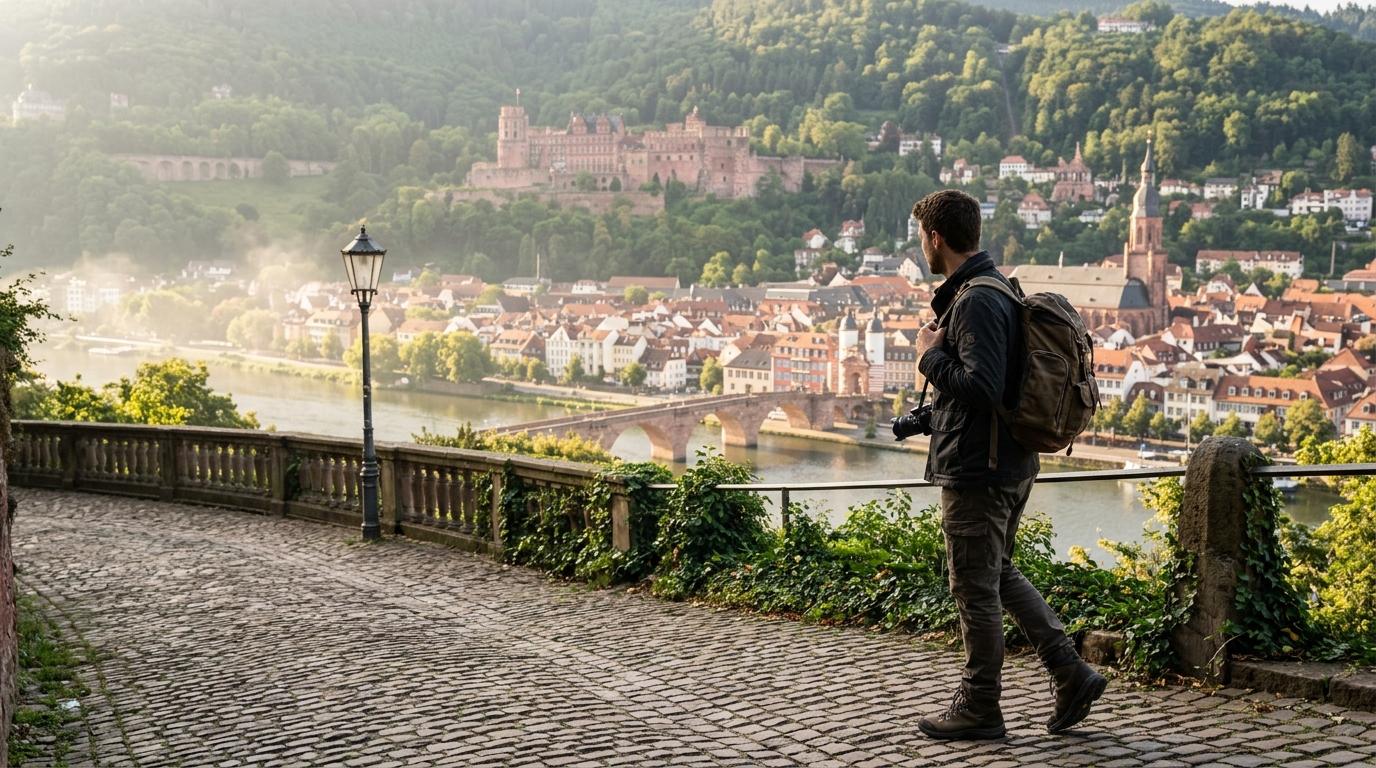
Heidelberg is often the city people fall for when they picture romantic Germany. The red sandstone castle ruins rise above the old town, the Old Bridge crosses the Neckar, and the Philosophers' Walk on the opposite hillside gives you the classic view. Heidelberg University, founded in 1386, is the oldest in Germany, and the student population keeps the cafés and public spaces busy year-round.
The compact center makes it one of the best cities for first time solo travelers. It's about an hour by road from Frankfurt Airport, which makes a direct private transfer far simpler than juggling train changes with your luggage on arrival day.
Mainz
Mainz sits where the Main meets the Rhine, a short hop from Frankfurt Airport. It's the city of Johannes Gutenberg, and the Gutenberg Museum displays some of the earliest printed Bibles. The thousand-year-old cathedral anchors the old town, and the Saturday market around it is a lively way to start the weekend.
Mainz is also a great destination for exploring traditional architecture, local food, and riverside scenery. Its relaxed atmosphere and convenient location make it an affordable alternative to staying in Frankfurt itself.
Lübeck
About an hour northeast of Hamburg, Lübeck's old town sits on an island ringed by water and is a UNESCO World Heritage Site. You'll recognize the twin towers of the Holstentor gate from postcards, and the European Hansemuseum tells the story of the trading league that made the city rich. Don't leave without trying marzipan, which Lübeck is famous for.
Lübeck is small enough to explore on foot in a day or two, and it pairs perfectly with Hamburg. Travemünde, its seaside district, adds a beach and a promenade if you want time by the Baltic.
Rostock and Warnemünde
Rostock is an old Hanseatic port with a university founded in 1419 and a historic center built around St. Mary's Church, home to a 15th-century astronomical clock. A short suburban train ride takes you to Warnemünde, a seaside resort with a wide sandy beach, a lighthouse, and the Alter Strom canal lined with fishing boats and fish sandwich stands.
Warnemünde is also an important Baltic Sea transport and ferry destination, so it gets busy during peak travel periods. For solo travelers visiting the coastal area, a pre-booked private transfer between the transport terminal and Hamburg saves the hassle of coordinating trains with your luggage and a fixed departure time.
Which City Suits Your Travel Style
The right pick depends on what you want from your time alone. Use this as a quick guide when choosing a base.
|
City |
Best for |
Pace |
Pairs well with |
|
Hamburg |
Culture, waterfront walks, harbor views |
Lively |
Lübeck |
|
Cologne |
Meeting people, historic sights, markets |
Social |
Bonn |
|
Bonn |
History, slow travel, river walks |
Calm |
Cologne |
|
Frankfurt |
Museums, arrival hub, city energy |
Busy |
Mainz, Heidelberg |
|
Heidelberg |
First trips, scenery, historic streets |
Relaxed |
Frankfurt |
|
Mainz |
Local food, markets, easy days |
Relaxed |
Frankfurt |
|
Lübeck |
Medieval streets, short stays |
Calm |
Hamburg |
|
Rostock and Warnemünde |
Beach time, coastal trips |
Seasonal |
Hamburg |
Best Picks for First-Time Solo Travelers
If this is your first trip alone, Heidelberg and Lübeck are the gentlest introductions. Both are compact, easy to navigate on foot, and full of visitors, so you'll never feel out of place exploring alone. Hamburg is the best choice if you want a big city that still feels manageable.
Best Picks for Meeting Other Travelers
Cologne is a good choice for meeting other travelers. Its busy hostel scene, welcoming locals, and range of walking tours make conversation easy. Hamburg's central neighborhoods and shared hostel spaces are another good option for meeting people during the day.
Staying Safe as a Solo Traveler in Germany
Germany is generally regarded as a safe country to explore alone, and all the cities above rank among the safest cities for solo travel in the sense that matters most: the neighborhoods visitors use are busy, well lit, and well policed. Most problems solo travelers run into are minor and avoidable.
-
Watch for pickpockets in crowded places such as main stations, busy public markets, and packed trams. Keep your phone out of back pockets.
-
Be thoughtful around main stations at night. Areas around central stations in Frankfurt, Hamburg, and Cologne can feel rough after dark. Pass through them rather than linger.
-
Know the emergency numbers. Dial 112 for ambulance and fire, or 110 for police.
-
Mind the bike lanes. They're often marked in red on sidewalks, and cyclists move fast. Stepping into one is a common tourist mistake.
-
Use licensed taxis or pre-booked rides late at night instead of accepting offers from strangers near stations.
The moment you're most exposed is usually arrival. You're tired, carrying everything you own, and still figuring out tickets and directions. That's exactly when a driver waiting at the gate with your name on a sign makes the biggest difference.
Getting Around: Trains, Local Transit, and Private Transfers
Germany's rail network makes it easy to move between solo travel destinations. Regional trains connect Hamburg with Lübeck and Rostock, while the Rhine cities of Cologne, Bonn, Mainz, and Frankfurt sit close together along fast rail lines. Inside each city, U-Bahn, S-Bahn, trams, and buses cover nearly everywhere a visitor needs to go.
That said, Deutsche Bahn's long-distance trains are known for delays, and strikes or track works occasionally disrupt service. Build some slack into travel days, especially if you have a flight or scheduled ferry departure to catch.
When a Private Transfer Makes More Sense
Public transport works well once you're settled. Arrival and departure days are a different story, and a private car often beats the train when:
-
Your flight lands late at night, when trains run less often and stations feel emptier.
-
You're heading somewhere without a direct rail link from the airport, such as Heidelberg from Frankfurt.
-
You have a large suitcase and multiple train changes ahead of you.
-
You're connecting to a scheduled ferry with a fixed departure time.
-
You'd rather not deal with ticket machines and platform changes after a long-haul flight.
With a private airport transfer, the price is agreed before you travel, your driver tracks your flight, and you're taken door to door. For solo travelers, that predictability is worth a lot. Platforms like Transpovia let you book a fixed-price private ride in advance across many cities in Germany, so your first and last hours of the trip are already sorted.
Practical Tips Before You Go
A few local habits catch first-time visitors off guard. Knowing them ahead of time makes solo days smoother.
-
Sundays are quiet. Most shops and supermarkets close on Sundays. Stock up on Saturday, or use shops inside major train stations, which usually stay open.
-
Carry some cash. Card acceptance has improved a lot, but smaller bakeries, market stalls, and traditional restaurants may still prefer cash.
-
Return eligible bottles and cans. Many beverage containers carry a deposit called Pfand, which you get back at machines in supermarkets.
-
Validate when required. Some transit tickets must be stamped before you board, and fare inspectors issue fines on the spot.
-
Tip modestly. Rounding up or adding around 5 to 10 percent is normal at restaurants. Tell the server the total you want to pay rather than leaving cash on the table.
-
Book a free walking tour on day one. It's the easiest way to get your bearings and meet other people traveling alone.
-
Plan around busy travel periods. Seasonal markets and major public events can bring huge crowds. Check accommodation availability and book early if your visit overlaps with a large local event.
Frequently Asked Questions
Is Germany a good country for first-time solo travelers?
Yes. Germany combines strong public transport, widespread English in tourist areas, and plenty of compact, walkable cities. Heidelberg, Lübeck, and Hamburg are especially easy starting points, and booking your airport pickup ahead of time removes most of the stress from arrival day.
Which German city is the safest for traveling alone?
All of the cities in this guide are considered safe for visitors who take normal precautions. Smaller cities such as Heidelberg, Bonn, and Lübeck tend to feel the most relaxed, while larger cities simply call for a little more care around main stations late at night.
How many days do I need for a solo trip to Germany?
A week lets you explore two regions comfortably, for example Hamburg and Lübeck in the north, or Frankfurt, Mainz, and Heidelberg in the southwest. With 10 to 14 days, you can add the Rhine cities of Cologne and Bonn or a few days on the Baltic coast.
Conclusion
The best cities for solo travel Germany offers aren't always the obvious headline names. Hamburg gives you big-city culture with a harbor breeze, Cologne makes meeting people easy, and Heidelberg, Lübeck, Bonn, and Mainz reward slow wandering. Frankfurt and the Baltic coast round out a trip with museums, historic streets, and sea air.
Pick one or two bases, link them by train, and plan your arrival and departure days carefully. Booking a private transfer with Transpovia for those moments means you start and end your trip relaxed, with more energy for the parts you actually came for.
"I'd never traveled alone before, so having a driver waiting when I landed in Hamburg took the nerves out of that first night. By the next morning I was exploring the harbor like I'd lived there for years."


