
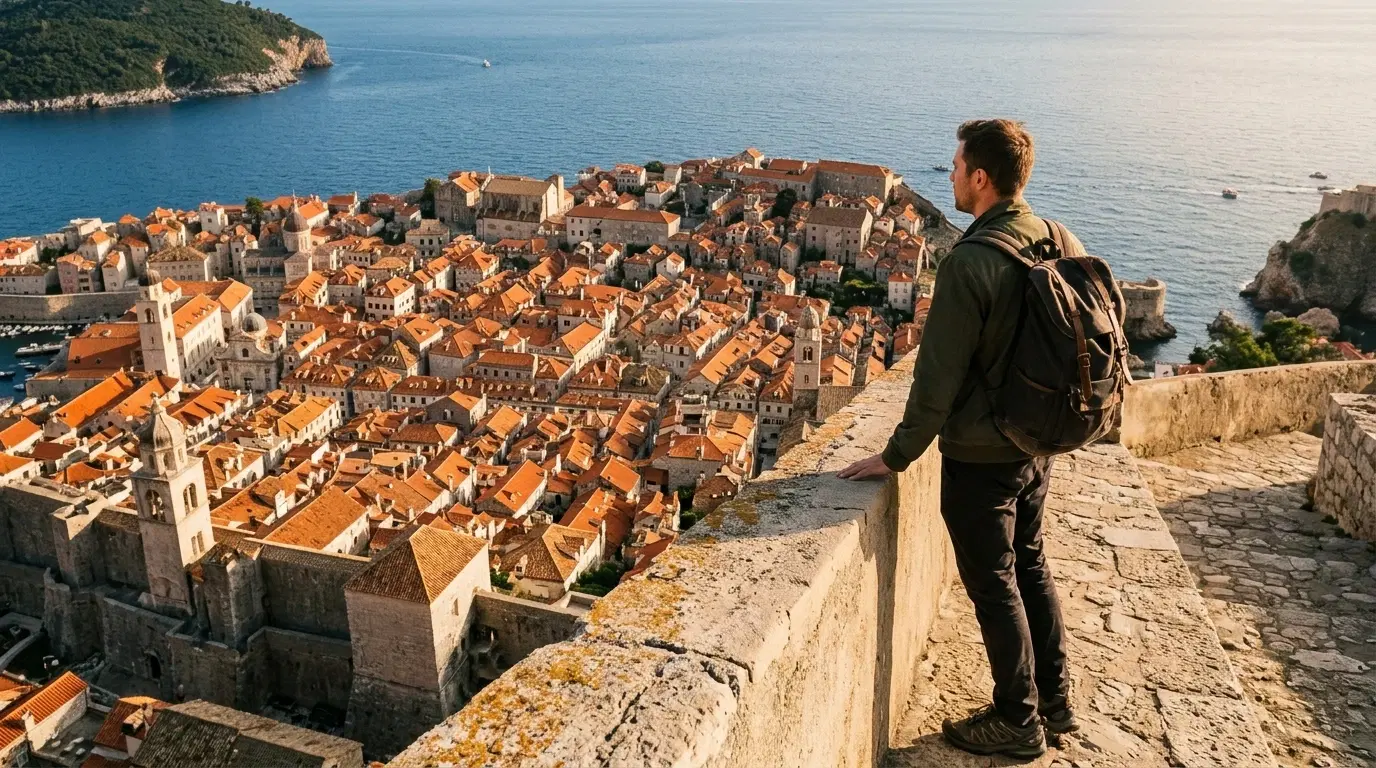
Traveling alone changes how you pick a destination. You want a place that's easy to arrive in, easy to walk, and lively enough that eating dinner by yourself doesn't feel strange. Croatia handles all of that well. Picking the best cities for solo travel Croatia has to offer comes down to what kind of trip you want: Roman ruins and island ferries, coffee culture and museums, or quiet sunsets on the water.
The country is compact, people speak English widely in tourist areas, and since January 2023 Croatia has used the euro and been part of the Schengen Area. That means no currency exchange and no extra border checks when you arrive from most of Europe. What follows is a practical guide to six cities that work especially well for people traveling alone, including where first-timers should start and how to move between them without stress.
Why Croatia Works So Well for Traveling Alone
Croatia regularly ranks among Europe's most popular solo travel destinations, and the reasons are practical. The main cities have walkable historic centers where most of what you want to see sits within a 20-minute stroll. Café culture is a big part of daily life, so sitting alone with a coffee for an hour is completely normal. Locals do it every day.
Violent crime against tourists is uncommon in the main tourist cities. The issues solo travelers usually run into are ordinary ones: pickpocketing in crowded summer streets and the occasional taxi driver at an airport curb quoting a tourist rate. Each of these is easy to avoid with a little planning.
Timing matters too. July and August bring heat and large crowds to the coast, while May, June, and September offer warm water and calmer streets. For solo travelers, shoulder season is often the sweet spot because accommodation is easier to find and you get more space to enjoy places at your own pace.
Quick Comparison: Best Cities for Solo Travel Croatia Has to Offer
Before you dig into each destination, here's how the top picks stack up for different kinds of solo travelers:
|
City |
Best For |
Vibe |
Main Arrival Point |
|
Split |
First-time solo travelers, island hopping |
Social, central, busy in summer |
Split Airport |
|
Zagreb |
Culture, food, year-round trips |
Relaxed capital, local feel |
Zagreb Airport |
|
Dubrovnik |
Bucket-list sightseeing, photography |
Dramatic, popular, pricier |
Dubrovnik Airport |
|
Zadar |
Sunsets, slower pace, national parks |
Laid-back, compact |
Zadar Airport |
|
Šibenik |
Quiet history, Krka day trips |
Small, authentic, calm |
Split or Zadar Airport |
|
Trogir |
Short stays, easy arrivals |
Tiny island town, charming |
Split Airport |
All of these sit within reach of Croatia's main airports and ports, which makes linking them into one trip far easier than with more remote corners of the country. If you're mapping a broader route, it helps to see how the major cities in Croatia connect before you commit to an itinerary.
Split: The Best Starting Point for First Time Solo Travelers
If you're unsure where to begin, start in Split. It's widely considered one of the best cities for first time solo travelers in Europe, and it's easy to see why after a single afternoon.
The heart of the city is Diocletian's Palace, a Roman emperor's retirement complex built around 1,700 years ago that now holds shops, apartments, and narrow lanes. It's a UNESCO World Heritage Site, but it doesn't feel like a museum. People live inside it. Getting slightly lost in its alleys is half the fun, and the space is small enough that you'll always find your way back to the waterfront Riva promenade.
What to Do in Split Alone
Walk up Marjan Hill in the early morning for views over the city and nearby islands. The forested park starts right at the edge of the old town, and the trails are well used, so you'll rarely feel isolated. In the afternoon, head to Bačvice beach and watch locals play picigin, a splashy shallow-water ball game that's a local institution.
Split is also Croatia's main ferry hub. Catamarans and car ferries run from the harbor to Hvar, Brač, Vis, and other islands, which makes Split the natural base for solo island hopping. Since the ferry port and main bus station sit side by side near the old town, you can drop your bag and be on a boat with very little effort.
A Note on Arriving in Split
Split Airport is located about 15 miles west of the city, near Trogir. Summer arrivals can be hectic, with long taxi lines and crowded shuttle buses. If you're landing late or carrying more than a backpack, a pre-booked private transfer to your apartment door is one of the easiest ways to start your trip calmly.
Zagreb: The Capital for Culture and Café Life
Zagreb doesn't get the same attention as the coast, and that's exactly why many solo travelers love it. It feels like a real working city rather than a holiday resort. You'll find fewer tour groups, fairer prices, and a strong local scene that welcomes visitors without catering only to them.
The city splits into two areas. The Upper Town (Gornji Grad) holds cobbled streets, St. Mark's Church with its colorful tiled roof, and the quirky Museum of Broken Relationships, which is surprisingly moving to visit alone. The Lower Town (Donji Grad) is where you'll find wide boulevards, parks, and Austro-Hungarian architecture. One of the world's shortest funicular railways links the two.
Why Zagreb Suits Solo Travelers
Start your morning at Dolac Market, where farmers sell fruit, cheese, and flowers under red umbrellas. Then grab a coffee on Tkalčićeva Street, the city's café strip. Zagreb also works in winter, when other Croatian destinations go quiet. Its Advent market has won Europe's best Christmas market title multiple times, and it gives the city a festive feel from late November through early January.
Zagreb also makes a smart base for day trips. Plitvice Lakes National Park is about a two-hour drive away, and Slovenia's capital Ljubljana is similarly close. Public buses reach both, but a private driver lets you leave early, beat the crowds, and come back on your own schedule.
Getting From Zagreb Airport to the City
Zagreb's Franjo Tuđman Airport sits about 10 miles south of downtown. There's an airport bus to the main bus station, but if your flight lands at night or your accommodation is up in the Upper Town's steep streets, booking airport transportation in advance saves you from figuring out connections alone after a long flight.
Dubrovnik: Bucket-List Views With a Solo-Friendly Old Town
Dubrovnik is the city most people picture when they think of Croatia, and it lives up to the reputation. The car-free Old Town, fully enclosed by medieval walls, is one of the safest-feeling places you can explore alone. Everything is pedestrian, well lit at night, and busy enough that you're never truly by yourself.
Walking the city walls is the signature experience. The full loop runs roughly 1.2 miles and offers constant views of terracotta rooftops and open sea. Go right at opening time or late in the afternoon to avoid both heat and cruise crowds. For another angle, ride the cable car up Mount Srđ at sunset, or take the short boat ride to Lokrum Island for swimming spots and peacocks wandering the paths.
Tips for Visiting Dubrovnik Alone
Dubrovnik is one of the pricier stops in Croatia, especially for single travelers who can't split rooms. Staying in Lapad or Gruž instead of inside the walls usually costs less and gives you a quieter evening. Local buses connect these neighborhoods to Pile Gate, the main entrance to the Old Town.
The airport is located near Čilipi, about 12 miles south of the city, and the road climbs along the coast. Because cars can't enter the Old Town, a driver who knows exactly which gate is closest to your accommodation makes a real difference when you're hauling a suitcase over stone steps.
Dubrovnik is also a launch point for day trips to Kotor in Montenegro and Mostar in Bosnia and Herzegovina. Crossing borders on your own by bus can involve long waits, while a private car gives you more control over timing and stops along the way.
Zadar: Sunsets and a Slower Pace
Zadar is ideal if you want coastal Croatia without the intensity of Split or Dubrovnik. Its old town sits on a small peninsula, so you can walk from one end to the other in about 15 minutes. It's relaxed, affordable compared to the southern hotspots, and full of small surprises.
The city's waterfront is one of its most appealing areas. The promenade offers open views across the Adriatic, while the nearby Greeting to the Sun installation lights up after dark in shifting colors. Watching the sunset here alone is one of the most peaceful experiences on the coast, and it's completely free.
Day Trips From Zadar
Zadar sits within easy reach of several natural highlights. Plitvice Lakes, Krka National Park, Paklenica's hiking trails, and the Kornati islands all make realistic day trips. For a solo traveler, the challenge is less about distance and more about timing. Tour buses fill parks by mid-morning, so arriving early with a private driver often means a quieter, more enjoyable visit.
Zadar Airport is just a short drive from the city, so arrivals are generally simple. The ferry port at Gaženica handles boats to nearby islands, while some smaller boats still leave from the peninsula itself, so check your departure point before you head out.
Šibenik: The Underrated Pick for Quiet Exploring
Šibenik often gets skipped by travelers rushing between Split and Zadar, which makes it a great find for people who enjoy exploring at their own pace. Its stone old town climbs a hillside above the water, with stairways and passages that reward wandering.
The Cathedral of St. James is a UNESCO-listed masterpiece built entirely of stone, famous for the carved human faces that circle its exterior. Šibenik is also home to St. Nicholas Fortress, another UNESCO site guarding the entrance to the harbor, plus several hilltop fortresses that offer great views.
The biggest draw for many visitors is Krka National Park, known for its waterfalls and wooden walkways. It's close enough to visit in a half day. Since Šibenik sits between the Split and Zadar airports, a private transfer from either one can drop you straight at your accommodation, or combine your airport arrival with a stop at Krka along the way.
Trogir: An Easy Base for Short Solo Trips
Trogir is a tiny medieval town on a small island connected by bridges to the mainland and to Čiovo island. Its entire historic core is a UNESCO World Heritage Site, and you can see most of it in an afternoon. That makes it perfect for a short stay, a first night after a late flight, or a calmer base outside busy Split.
Because Trogir is so close to Split Airport, it's one of the easiest arrivals in Croatia. You can land, reach your room quickly, and be eating grilled fish on the waterfront within the hour. Boats and buses also connect Trogir with Split, so you can explore the bigger city during the day and come back to quieter streets at night.
Safest Cities for Solo Travel and How to Stay Comfortable
All six destinations above are among the safest cities for solo travel in Croatia, but a few habits make your trip smoother wherever you go:
-
Watch your belongings in crowds. Pickpocketing is the most common issue in busy summer spots like Split's palace area and Dubrovnik's Stradun.
-
Check prices before ordering. Review menus and ask about prices before purchasing food, services, or other items in busy tourist areas.
-
Respect local rules. Some coastal towns, including Split and Hvar, fine visitors for walking around town in swimwear.
-
Save the emergency number. The EU-wide number 112 works throughout Croatia.
-
Plan your arrival. The most vulnerable moment on any solo trip is often landing in an unfamiliar airport, tired, at night, and unsure how to get to your accommodation.
That last point is worth thinking about before you book flights. Buses run on fixed schedules and stop service late at night. Ride-hailing apps operate in the major cities, but prices can climb during busy periods. Airport taxi stands work, though fares vary and you won't always know the total in advance. A pre-booked private transfer removes that uncertainty: you know the price ahead of time, a driver is waiting when you walk out, and you're taken directly to your door.
Getting Between Croatian Cities as a Solo Traveler
Croatia doesn't have much of a passenger rail network along the coast, so buses carry most travelers between cities. They're affordable and reasonably comfortable, but they work on fixed timetables, can be crowded in summer, and often drop you at a bus station rather than near your accommodation.
Ferries and catamarans handle the islands. Schedules are much fuller in summer than in winter, so if you're traveling outside peak season, confirm sailing times before you plan your route.
For key legs of a solo trip, private car transfers fill the gaps public transport leaves. They're especially useful in a few situations:
-
Late-night or early-morning flights when buses aren't running
-
Old towns with no car access, where a driver can get you to the closest gate
-
National park visits, where you want to arrive before crowds and leave when you're ready
-
Cross-border trips to Montenegro, Bosnia and Herzegovina, or Slovenia
-
Ferry connections, where missing a sailing can throw off a whole day
Services like Transpovia let you book fixed-price private transfers between Croatia's main airports, ports, cities, and nearby national parks. For a solo traveler, that means fewer moving parts to manage and more energy for the trip itself.
Sample Route for a First Solo Trip to Croatia
If you have about 10 days, this route covers the best cities to travel alone in Croatia without rushing:
-
Zagreb (2 nights): Explore the Upper Town, markets, and museums.
-
Plitvice Lakes on the way to Zadar: Break up the journey with a park visit.
-
Zadar (2 nights): Enjoy the waterfront views and a relaxed coastal start.
-
Šibenik and Krka (1 night): Cathedral, fortresses, and waterfalls.
-
Split (3 nights): Base for the palace, Marjan Hill, and an island day trip.
-
Dubrovnik (2 nights): Walls, Lokrum, and the cable car before flying home.
Flying into Zagreb and out of Dubrovnik saves you from backtracking along the coast. A private transfer for the Zagreb to Zadar leg, with time at Plitvice built in, turns what would be two separate bus rides into one easy day.
Frequently Asked Questions
Is Croatia safe for solo female travelers?
Croatia is generally considered a comfortable destination for women traveling alone. The main cities have busy, well-lit historic centers, and harassment is not commonly reported as a major problem. Standard precautions still apply: keep your belongings secure, use licensed transport, and arrange airport pickups in advance if you're arriving late at night.
Which Croatian city is best for first time solo travelers?
Split is usually the best choice for a first solo trip. It's central, easy to navigate, and full of other travelers, and it connects to islands and other cities by ferry and road. Zagreb is a strong alternative if you prefer culture, food, and fewer crowds, especially outside summer.
Should I take a bus or a private transfer from Croatian airports?
Airport buses are cheaper and work well during the day if you're traveling light and staying near a central stop. A private transfer makes more sense if you're landing late, carrying luggage, staying in a pedestrian old town, or simply want a guaranteed price and a direct ride to your door. Many solo travelers mix both, using buses during the day and booking private transfers for arrivals and long cross-country legs.
Conclusion
Croatia makes traveling alone feel easy without making it feel dull. Split gives you energy and island access, Zagreb offers culture and a local rhythm, Dubrovnik delivers unforgettable views, and Zadar, Šibenik, and Trogir reward travelers who prefer a slower pace. Each one is walkable, welcoming, and close enough to the others to combine into a single trip.
The best way to enjoy these solo travel destinations is to plan the parts that cause the most stress, especially arrivals, late-night connections, and day trips with tight timing. Sort those out before you go, and you'll spend your time in Croatia doing what you came for: exploring, swimming, eating well, and enjoying the freedom of traveling on your own terms.
*"I was nervous about landing in Split at midnight on my own, but having a driver waiting with my name made the whole trip start right. By the next morning, I was enjoying the waterfront views like I'd lived there for years."


