
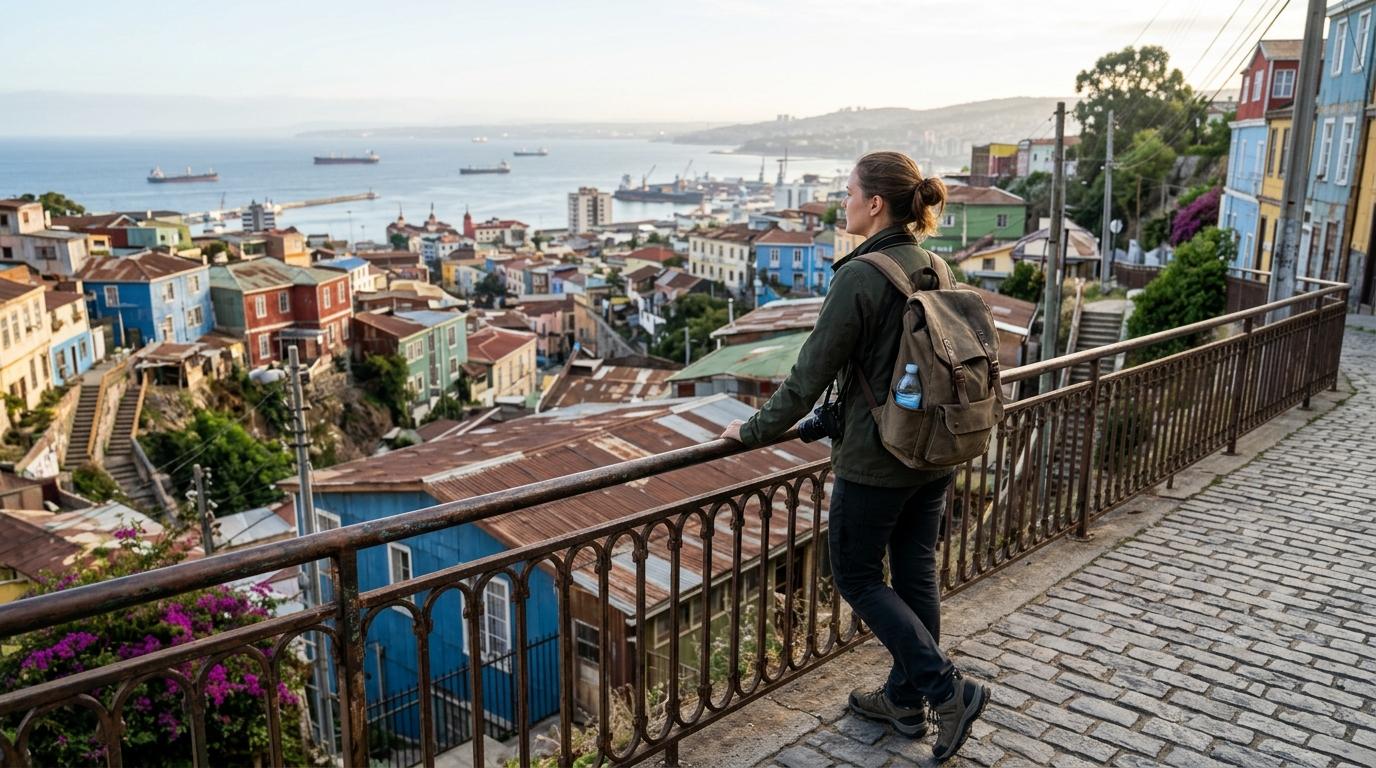
Chile is long, narrow, and surprisingly easy to explore on your own. In a single trip you can enjoy coffee in a Santiago café, watch the sun drop into the Pacific from a Valparaíso hillside, stargaze in the driest desert on Earth, and hike beneath granite towers in Patagonia. Choosing the best cities for solo travel Chile has to offer comes down to the trip you want: social and lively, quiet and scenic, or wild and remote. This guide covers the cities and towns that work best when you're traveling alone, what each one feels like on the ground, how to stay safe, and how to handle the long transfers that come with a country stretching roughly 2,670 miles from north to south.
What Makes a City Work for Solo Travelers in Chile
Most of the cities in Chile that appeal to independent travelers share a few traits. They have walkable centers where you can find food, coffee, and a pharmacy without a car. They have hostels or guesthouses with common areas, which makes meeting people effortless. And they have tour operators running shared group departures, so you're not stuck paying for an entire vehicle just to see a lagoon or a glacier.
Good transport links matter too. Chile's distances are enormous, and the best cities for solo travelers are the ones you can reach and leave without a complicated chain of buses. The places below check most of those boxes, and each offers something different.
The Best Cities for Solo Travel Chile Has to Offer
Santiago: The Easiest Starting Point
Most international flights land at Arturo Merino Benítez International Airport, so Santiago is where nearly every solo trip begins. It's a big, modern capital that rewards travelers who choose the right neighborhood. Lastarria and Bellavista put you close to cafés, small museums, restaurants, and the trails up Cerro San Cristóbal. Providencia is calmer and more residential, with easy metro access.
For first-time solo travelers, Santiago is a forgiving introduction. The metro is clean and simple to navigate, free walking tours are an easy way to meet people on day one, and guided excursions to the Maipo and Casablanca valleys offer opportunities to explore the surrounding countryside. Give yourself two or three days here to recover from the flight and get comfortable before heading north or south.
The airport sits about 30 to 45 minutes from the central neighborhoods depending on traffic, and that first ride after a long-haul flight is when most people traveling alone feel least alert. It's worth planning ahead.
Best for: first-time solo travelers, food, urban culture, and sightseeing.
Valparaíso: Hills, Murals, and Ocean Views
About 75 miles northwest of Santiago, Valparaíso tumbles down a series of steep hills toward the Pacific. Its historic quarter is a UNESCO World Heritage Site, and its old funicular elevators, murals, and winding stairways make it one of the most photogenic cities in South America.
Cerro Alegre and Cerro Concepción are the best bases for solo visitors. Both are packed with guesthouses, small restaurants, and street art routes, and they feel more relaxed than the flat port district below. Next-door Viña del Mar offers beaches and a tidier, resort-style atmosphere if you want a change of pace.
Valparaíso is also where staying alert matters most. Keep your phone tucked away near the port, skip empty stairways after dark, and take a car back up the hill late at night instead of walking. Cruise passengers often start or end their trips here or at nearby San Antonio, so it's common to pair a stay in Valparaíso with a ride to Santiago's airport.
Best for: art, photography, coastal scenery, and day trips.
San Pedro de Atacama: The Desert's Social Hub
Small, dusty, and full of adobe buildings, San Pedro de Atacama is the place solo travelers in the north gravitate to. The village sits at roughly 7,900 feet, and almost everything you'll want to do here runs as a shared tour: sunset at Valle de la Luna, pre-dawn trips to the El Tatio geysers, high-altitude salt lagoons, and astronomy sessions under some of the clearest skies anywhere. That makes it one of the easiest solo travel destinations in the country for meeting people without trying.
The catch is access. The nearest airport is in Calama, about 60 miles away across open desert. Late arrivals, limited shuttle times, and the altitude headache many visitors feel on the first day all make a pre-arranged ride a sensible choice. Keep your first day light, drink plenty of water, and save the highest excursions for later in your stay.
Best for: adventure, astronomy, meeting other travelers.
Puerto Varas and Puerto Montt: The Lake District's Easy Pair
Puerto Varas is the kind of town that makes traveling alone feel simple. It sits on the shore of Lake Llanquihue with the Osorno Volcano rising across the water, and its wooden houses and German-style bakeries reflect the region's 19th-century settler history. Kayaking, cycling, rafting on the Petrohué River, and hikes in Vicente Pérez Rosales National Park are all close by and easy to join as part of a group.
Puerto Montt, a short drive south, is the regional hub, with El Tepual International Airport and a busy cruise port. Most visitors fly into Puerto Montt and stay in Puerto Varas, which is quieter in the evenings and better set up for travelers. A direct ride from the airport to your lakeside lodging saves you a trip through the bus terminal with your luggage.
Best for: outdoor activities, scenery, a slower pace.
Castro, Chiloé: Island Life at Its Own Rhythm
Chiloé Island feels like a world of its own, and Castro is its capital. The town is famous for its palafitos, brightly painted houses built on stilts over the water, and for its wooden churches. Several of the island's churches are protected as a UNESCO World Heritage Site, including the yellow and purple Church of San Francisco on Castro's main square.
Castro works well for solo travelers because it's small, calm, and full of family-run guesthouses whose hosts happily point you toward local markets, curanto (the island's traditional feast of seafood, meat, and potatoes cooked in a pit), and day trips to Chiloé National Park. Expect about three hours by road from Puerto Montt, including a short ferry across the Chacao Channel. Castro also receives cruise ships, so check the port schedule if you prefer quieter days in town.
Best for: culture, food, unhurried exploring.
Puerto Natales: Base Camp for Torres del Paine
If Torres del Paine National Park is on your list, Puerto Natales will be your base. This small town on the Última Esperanza Sound fills each summer with hikers preparing for the W Trek and the longer O Circuit. Its hostels, gear rental shops, and trail briefings make it one of the most social stops in Chile.
You don't have to be a serious trekker to enjoy it. Day tours into the park run regularly in high season, and the waterfront offers long, windy walks with fjord views. Puerto Natales has its own small airport, but flights are more limited than those into Punta Arenas, about three hours south by road. Many visitors fly into Punta Arenas and transfer north. The drive crosses wide, empty steppe with few services, and Patagonian weather changes fast, so have your ride sorted before you land.
Best for: hiking, nature, social hostel life.
Punta Arenas: History on the Strait of Magellan
Punta Arenas has a frontier-town feel shaped by sheep ranching, shipping, and polar exploration. Its main square, grand old mansions, and beautifully kept municipal cemetery are easy to explore on foot in a day. Seasonal boat trips head out to see Magellanic penguins on nearby islands, and the city serves as a jumping-off point for southern Patagonia and Tierra del Fuego.
It suits solo travelers who enjoy history and a quieter evening routine. The airport is a short drive from downtown, and the port welcomes expedition and cruise ships heading toward the fjords and Antarctica, so you'll often run into fellow travelers passing through.
Best for: history, wildlife, Patagonia connections.
Hanga Roa, Easter Island: Remote but Rewarding
Hanga Roa is the only town on Easter Island, known locally as Rapa Nui, more than 2,000 miles off the Chilean mainland. It's small, relaxed, and easy to get around, and Mataveri International Airport sits right at the edge of town.
A solo trip here takes more planning than anywhere else in Chile. Visitors must complete a Single Entry Form before flying, hold a round-trip ticket for a stay of no more than 30 days, and have a reservation at lodging registered with Chile's national tourism service. Most archaeological sites inside Rapa Nui National Park, including the moai quarry at Rano Raraku and the ceremonial village of Orongo, require an accredited guide, and park tickets should be bought in advance. Anakena Beach and Tahai are among the spots you can visit on your own.
For someone traveling alone, the guide requirement turns out to be a perk. You'll get cultural context you'd never pick up by yourself, and small-group tours keep costs reasonable.
Best for: archaeology, culture, a once-in-a-lifetime trip.
Antofagasta: A Practical Northern Gateway
Antofagasta isn't a classic backpacker stop, but it's a useful one to know. The northern port city is a mining and business center with a long seaside promenade, and just north of town stands La Portada, a striking natural sea arch that has become a regional symbol.
Solo travelers usually pass through on work trips, or when flights into Calama are full or expensive. If you're using Antofagasta as your route into the desert, remember that San Pedro de Atacama is a long drive inland, often four hours or more. Arrange reliable airport transportation before you land rather than negotiating a ride at the curb after your flight.
Best for: business travelers, alternative access to the Atacama.
Safest Cities for Solo Travel in Chile and How to Stay Safe
The US State Department currently rates Chile at Level 2, "Exercise Increased Caution," citing crime and civil unrest. That's the same tier given to several popular European countries, and for most visitors it means staying alert to petty theft rather than avoiding the country. Street crime such as pickpocketing and phone snatching is common in busy parts of Santiago and Valparaíso, and demonstrations can occasionally disrupt the capital's metro and buses with little warning.
Smaller places tend to feel calmer. Puerto Varas, Puerto Natales, Punta Arenas, Castro, and Hanga Roa are generally relaxed and easy to navigate alone, though no destination is risk-free. A few habits make a big difference:
-
Keep your phone out of sight on crowded sidewalks and in the metro.
-
Never leave bags unattended, even inside a parked vehicle.
-
Steer clear of demonstrations and check local news before crossing the city.
-
After dark, use app-based rides, registered taxis, or a pre-booked car instead of flagging someone down.
-
Share your itinerary and transfer details with someone back home.
Why Private Transfers Make Sense When You Travel Alone
When you're on your own, there's nobody to watch your bags while you sort out bus tickets, and nobody to help you negotiate a fare in a language you're still learning. That's why the arrival leg, from the airport or cruise port to your hotel, is where a private car booking earns its keep.
Chile's geography makes this even more relevant. Several of the routes solo travelers use most are long and remote: Calama to San Pedro de Atacama, Punta Arenas to Puerto Natales, Antofagasta into the desert, and Puerto Montt down to Chiloé. Flights into these regions are often delayed by weather or arrive late at night, when shared shuttles may already be gone.
Booking ahead with a provider like Transpovia means you get a fixed price confirmed before you travel, flight tracking that adjusts your pickup if your plane runs late, and a licensed driver waiting at arrivals. You walk out of the terminal, find your name, and get to your hotel without haggling or guessing.
It's fair to say a private transfer costs more per person than a shared shuttle when you're traveling alone. Many solo travelers balance this by using private rides selectively: for late-night arrivals, long desert or Patagonian runs, early departures they can't afford to miss, and the first day in a new country. Between those moments, shared tours and long-distance buses fill the gaps nicely.
How to Combine These Cities on One Solo Trip
Chile is too long to see in one go, so most people pick a region or two and fly between them. Here are a few routes that work well for first-timers.
Two weeks, north to south: Start with three nights in Santiago and two in Valparaíso. Fly to Calama for four nights in San Pedro de Atacama, then fly south (usually via Santiago) to Puerto Montt for three nights in Puerto Varas and two in Castro.
Ten days in Patagonia: Spend two nights in Santiago, fly to Punta Arenas for a night or two, then transfer to Puerto Natales for five or six nights of hiking and day trips in Torres del Paine.
Easter Island add-on: Rapa Nui pairs well with any itinerary. Four or five nights in Hanga Roa gives you enough time for the main guided sites, a beach day at Anakena, and a visit to Tahai without rushing.
Practical Tips for Traveling Alone in Chile
Entry, Money, and Customs
US citizens don't need a visa for short tourist stays, but check the current rules for your nationality before booking. Chile takes agricultural controls seriously, so declare any food, plant, or animal products on the customs form when you arrive. Credit cards are widely accepted in cities, though it's smart to carry some Chilean pesos for markets, small towns, and tips.
When to Go
Patagonia and the Lake District are at their best during the southern summer, roughly November through March, when days are long and most tours and trails are running. The Atacama can be visited year-round, but desert nights get very cold, so pack layers. Santiago and Valparaíso are especially pleasant in spring and fall, when crowds are thinner and temperatures are mild.
Language and Staying Connected
Spanish is the main language, and Chilean Spanish is fast and full of local slang. English is common in tourist hubs like San Pedro, Puerto Natales, and Hanga Roa, but less so elsewhere. A few basic phrases and an offline translation app go a long way. Set up mobile data before you leave home so you can share your location, call your driver, and pull up maps the moment you land.
Frequently Asked Questions
What is the best city in Chile for first-time solo travelers?
Santiago is the easiest place to start. It has the country's main international airport, a simple metro system, plenty of hostels and guesthouses, and walking tours that make it easy to meet people. Once you're comfortable, Valparaíso is a natural second stop just a couple of hours away.
How many days do you need for a solo trip to Chile?
Ten days is enough to enjoy two regions, such as Santiago with the Atacama or Santiago with Patagonia. Two weeks or more lets you add the Lake District, Chiloé, or Easter Island without spending most of your time in transit. Because distances are so large, plan on flying between regions rather than traveling overland.
Can you get around Chile without renting a car?
Yes. Domestic flights connect the major regions, long-distance buses are comfortable for shorter hops, and shared tours cover most attractions near San Pedro, Puerto Natales, and Puerto Varas. For airport and port arrivals, especially on long or late-night routes, a pre-booked private transfer is the simplest way to get from the terminal to your hotel without driving yourself.
Conclusion
The best cities to travel alone in Chile each bring something different. Santiago eases you in, Valparaíso adds color and energy, San Pedro de Atacama surrounds you with fellow adventurers, the Lake District and Chiloé slow everything down, and Patagonia and Easter Island deliver the kind of scenery people cross oceans for.
Whichever route you choose, a little planning goes a long way. Pick social bases, stay alert in the bigger cities, and sort out the long arrival legs before you fly. Booking those transfers through Transpovia lets you spend less energy on logistics and more on the trip you came for.
"I was nervous about landing in Calama late at night on my own, but seeing a driver waiting with my name made the whole desert leg feel easy. After that, all I had to think about was the stars."


