
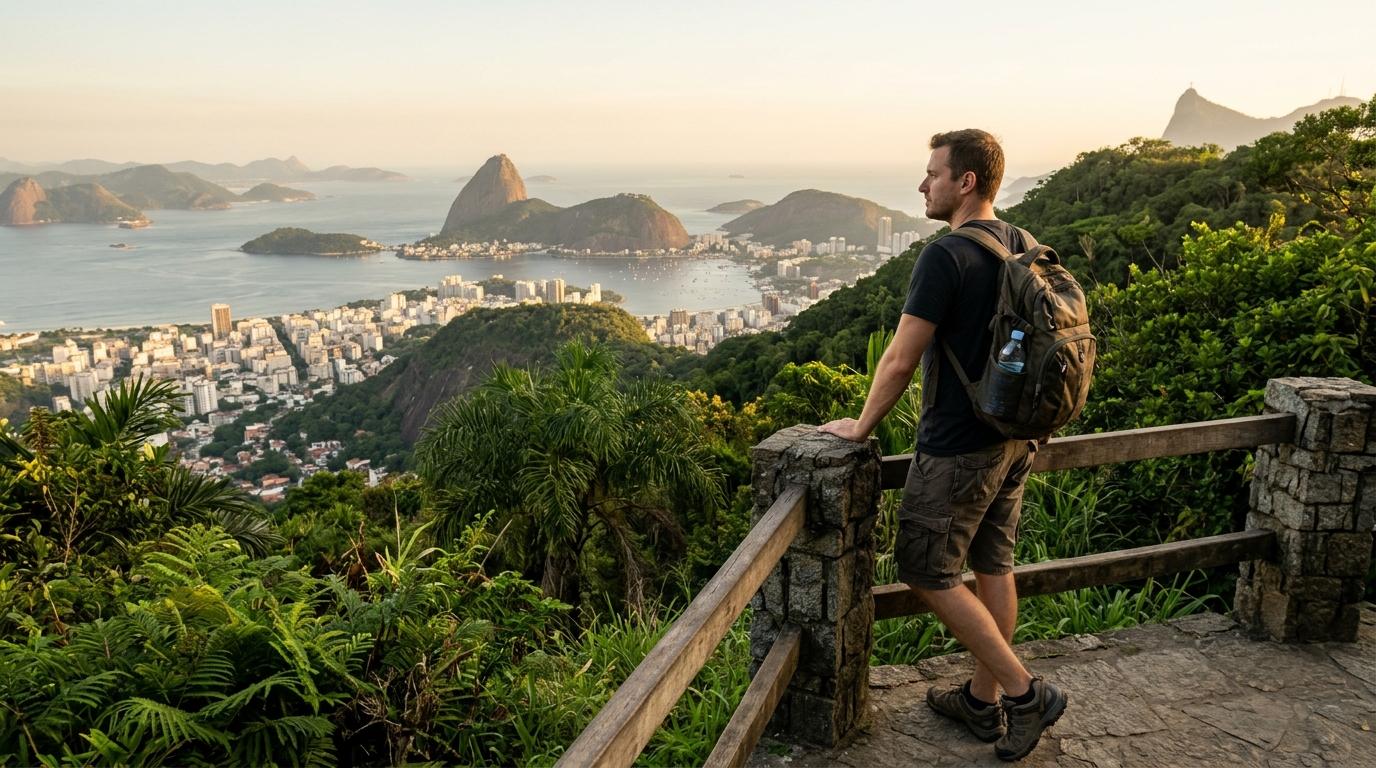
Brazil is an easy country to fall into conversation with. Someone at the next table asks where you're from, a walking tour brings together travelers from different countries, and a day trip with strangers can end with everyone sharing travel tips. That openness makes it a rewarding place to explore on your own. It's also a huge country, and the city you choose shapes how relaxed, social, and safe your trip feels.
This guide to the best cities for solo travel Brazil has to offer looks at where to base yourself, which neighborhoods work best for someone on their own, what each city does well, and how to handle the part of the trip that catches many solo travelers off guard: getting from the airport to your accommodation after a long flight.
What Makes a Brazilian City Work for Solo Travelers
Not every great Brazilian destination is a great solo destination. A beach town that shines for couples can feel isolating when you're alone, and a sprawling city with no clear tourist base can be exhausting to navigate without a travel partner.
The cities in this guide share a few traits. Each has at least one walkable neighborhood where visitors naturally stay, eat, and explore. Each has a solid hostel and guesthouse scene, which matters when you want company. Group tours, walking tours, and day trips are easy to join, so you're never stuck figuring everything out alone. And each is served by a major airport with good domestic connections, which makes it simple to link several cities into one trip.
Best Cities for Solo Travel Brazil: A City-by-City Guide
Florianópolis
Florianópolis, or Floripa, sits mostly on Santa Catarina Island in the south of the country. It feels more laid-back than Rio or São Paulo, and it's a favorite for solo travelers who want beaches, nature, and a relaxed atmosphere without big-city intensity.
Lagoa da Conceição is the natural base. The neighborhood sits beside a large lagoon, packs in hostels, cafés, and restaurants, and puts you within reach of surf beaches like Joaquina and Mole, plus the sand dunes where people try sandboarding. If you want something quieter, Campeche and Barra da Lagoa have a slower, more local rhythm.
The catch is distance. The island is spread out, local buses between beaches can be slow, and the airport sits in the south, a fair drive from the northern and eastern beaches. Plan your arrival and any beach-to-beach moves with that in mind.
Keep the season in mind, too. Southern Brazil gets genuinely cool between June and August, so Floripa is at its best from December through March, when the weather is warmer and beach conditions are generally more inviting.
Rio de Janeiro
Rio is the city most people picture when they think of Brazil, and it lives up to it. The mountains, beaches, and forest that shape the city are recognized by UNESCO as a World Heritage cultural landscape, and the views from Sugarloaf Mountain and Christ the Redeemer are worth every bit of the hype.
For solo travelers, the South Zone (Zona Sul) is the place to stay. Copacabana has the most hotels and a lively boardwalk. Ipanema and Leblon feel a little more polished, and Botafogo has become a favorite for hostels, cafés, and restaurants that locals actually go to. Lapa is known for its historic streets and architecture, though it's better explored with a group or a hostel crew than by wandering on your own late at night.
Rio rewards a bit of street sense. Keep your phone out of sight on the beach and on busy sidewalks, avoid empty beaches and trails after dark, and join a guided group for hikes like Dois Irmãos or for visits to favela communities. The city has two airports: Galeão, which handles most international flights and sits on Ilha do Governador north of the center, and Santos Dumont, a domestic airport right by downtown on Guanabara Bay.
São Paulo
São Paulo is South America's largest city and Brazil's food and art capital. It doesn't have beaches, but it may be the easiest place in the country to stay busy and well fed on your own.
Pinheiros and Vila Madalena are ideal bases, with street art, cafés, restaurants, and plenty of hostels. Staying near Avenida Paulista puts you close to the São Paulo Museum of Art (MASP) and the metro, and on Sundays the avenue closes to cars and fills with food stalls, families, and visitors. Liberdade, the city's Japanese neighborhood, is a must for its weekend street food market.
The city's scale is the main challenge. São Paulo/Guarulhos International Airport is in a separate municipality northeast of the city, and traffic can easily stretch the drive into the center past an hour. Congonhas, which handles domestic flights, is far more central. Some travelers also land at Viracopos in Campinas, a hub for domestic routes, which is roughly a 90-minute drive or more from central São Paulo.
Salvador
Salvador, the capital of Bahia, is the heart of Afro-Brazilian culture and one of the most memorable cities in the country. It was Brazil's first capital, and its historic center, Pelourinho, is a UNESCO World Heritage Site lined with pastel colonial buildings and Baroque churches.
Solo travelers come for the food (acarajé from a street vendor is close to mandatory), historic architecture, local markets, and distinctive cultural heritage. Pelourinho is beautiful during the day, but many visitors prefer to sleep in Barra, a beachfront neighborhood with a lighthouse, sunset views, and plenty of guesthouses, or in a quieter part of the city with convenient access to restaurants and visitor attractions.
Pelourinho's main squares are busy and policed during the day and early evening, while some side streets empty out after dark. Take a ride rather than walking between neighborhoods at night. Salvador's airport is well north of the center, so arranging airport transportation before you land saves you from negotiating with drivers after a long flight and gets you straight to Barra or the historic center.
Foz do Iguaçu
Foz do Iguaçu is a smaller city in Paraná, built around one of the world's great natural sights. Iguaçu Falls straddles the border with Argentina, and Iguaçu National Park is a UNESCO World Heritage Site.
The Brazilian side gives you the big panoramic views, while the Argentine side offers longer walking trails that bring you right up to the Devil's Throat. Many visitors spend one day on each side. Add the Parque das Aves bird sanctuary next to the park entrance and a tour of Itaipu Dam, and you have two or three full days.
Foz is one of the easiest places in Brazil to travel alone. Tours are well organized, distances are short, and the airport sits on the road toward the national park. Bring your passport if you plan to cross into Argentina, and check entry rules for your nationality before you go.
Belo Horizonte
Belo Horizonte doesn't get the attention of Rio or Salvador, which is exactly why some solo travelers love it. The capital of Minas Gerais is known for its food culture, and Mineiro cooking, with its cheese bread, regional dishes, and traditional sweets, is a big reason to visit.
Start at Mercado Central, then spend an evening in Savassi, the city's main neighborhood for restaurants and cafés. The Pampulha Modern Ensemble, designed by Oscar Niemeyer, is a UNESCO World Heritage Site, and Inhotim, a huge open-air contemporary art museum and botanical garden in nearby Brumadinho, makes an unforgettable day trip. The colonial town of Ouro Preto is also within reach.
Belo Horizonte's main airport, Confins, is about 40 kilometers north of the city, so plan for a longer transfer than you might expect.
Búzios
Búzios is a beach town rather than a big city, but it earns a spot on this list as the easiest beach escape from Rio. The peninsula has dozens of small beaches, many of them calm enough for swimming and snorkeling, and Rua das Pedras has a selection of restaurants, cafés, and shops to explore.
It's a good place to slow down after the pace of Rio, and its compact layout means you can explore without much planning. Búzios is roughly a two-and-a-half to three-hour drive from Rio, depending on traffic, and there's no airport in town. A private transfer straight from Rio's airports is often the simplest way to get there, especially with luggage.
Best Cities for First-Time Solo Travelers in Brazil
If this is your first trip to Brazil, or your first trip alone anywhere, start with places that are easy to navigate and simple to meet people in.
Florianópolis is the gentlest introduction. Lagoa da Conceição is compact, the hostel scene is friendly, and the overall pace is relaxed. Foz do Iguaçu is another low-stress pick, since most of what you'll do is organized around the falls and well-run tours. Rio works well for first-timers too, as long as you stay in the South Zone and join group activities for anything beyond the main sights.
São Paulo and Salvador are better as a second or third stop, once you've found your rhythm. São Paulo's size can feel overwhelming at first, and Salvador is most rewarding when you're comfortable reading a city and knowing when to call a ride.
Safest Cities for Solo Travel in Brazil
No Brazilian city is risk-free, and safety in Brazil often depends more on the neighborhood, time of day, and your habits than on the city itself. A well-chosen base in Rio can feel calmer than a poorly chosen one in a smaller town.
That said, Florianópolis and Foz do Iguaçu generally have a more relaxed feel than the largest cities, and travelers often find them easier to settle into. In Rio, São Paulo, Salvador, and Belo Horizonte, staying in the neighborhoods recommended above makes a real difference.
A few habits help everywhere. Petty theft, especially phone snatching, is the most common problem visitors face, so keep valuables out of sight and carry only what you need for the day. Avoid walking alone through quiet streets at night, and use a booked car or ride app instead of flagging down unmarked vehicles. If someone does try to rob you, hand over what they want and don't resist.
Getting Around Alone: Why Private Transfers Make Sense
For solo travelers, the arrival is often the most vulnerable part of the trip. You've just come off a long flight, you're carrying all your luggage, your phone may not have local data yet, and you're surrounded by drivers offering rides in a language you might not speak. English is far less common in Brazil than many visitors expect, especially outside hotels and tourist businesses.
Ride apps like Uber and 99 work in Brazil's major cities, and official airport taxis are available too. Both are reasonable options once you're settled. On arrival day, though, a pre-booked private transfer removes most of the guesswork. Your driver tracks your flight, waits in the arrivals hall with your name, helps with your bags, and takes you straight to your accommodation at a price agreed before you travel. No haggling, no hunting for a pickup spot, and no wondering whether the car you're getting into is legitimate.
Private transfers also make sense beyond the airport. Long trips like Rio to Búzios, airport runs on a spread-out island like Florianópolis, or late-night arrivals in Salvador are all easier when someone is waiting for you. Platforms like Transpovia let you book private airport transfers and city rides across major cities in Brazil with fixed pricing and licensed drivers, which is especially reassuring when you're traveling alone.
Practical Tips for Traveling Alone in Brazil
-
Check visa rules early. Since April 10, 2025, US, Canadian, and Australian citizens need an e-visa to enter Brazil. Apply well before your trip, and confirm current requirements for your passport.
-
Learn a little Portuguese. Basic greetings, "obrigado" or "obrigada" (thank you), and a translation app go a long way. Brazilians appreciate the effort, and Spanish is not a reliable substitute.
-
Sort your data before landing. An eSIM or local SIM lets you use maps, ride apps, and messaging right away. WhatsApp is how most Brazilian businesses, guesthouses, and tour operators communicate.
-
Fly between distant cities. Brazil is enormous. Domestic flights connect all the cities in this guide, while long-distance buses make more sense for shorter hops.
-
Plan around peak travel periods. School holidays and the summer season can bring larger crowds and higher prices, especially in Rio and Salvador. Book accommodation and transfers well in advance if you're traveling during these periods.
-
Share your plans. Let someone at home or at your hostel know where you're headed for the day, particularly for hikes or day trips.
Sample Two-Week Solo Route
If you're trying to fit several of these cities into one trip, a route like this balances big-city exploration with downtime. Start with four or five days in Rio, then head to Búzios for two or three days on the beach. Fly to Foz do Iguaçu for two days at the falls, continue to Florianópolis for three or four days, and finish in Salvador to explore its historic center, architecture, and local cuisine. If you prefer food and art over beaches, swap Búzios for a few days in São Paulo and add Belo Horizonte for Inhotim and Mineiro cooking.
Frequently Asked Questions
What is the safest city in Brazil for solo travelers?
Florianópolis is often the first choice for travelers who want a calmer start, thanks to its relaxed pace and compact visitor areas like Lagoa da Conceição. Foz do Iguaçu is another easygoing option. In larger cities, your neighborhood and your habits matter more than the city name, so choose a well-located base and use booked transportation at night.
Is Brazil a good destination for solo female travelers?
Many women travel through Brazil on their own and have great trips. The same precautions apply as in any large country: stay in central, well-reviewed accommodation, avoid walking alone late at night, and keep your personal belongings secure in crowded public places. Hostels with female-only dorms and pre-booked rides from the airport make the first days much easier.
How many days do I need to visit several cities in Brazil?
Two weeks is a comfortable minimum for three or four cities, because distances are large and you'll lose some time to flights and transfers. With one week, focus on two places, such as Rio and Búzios or Rio and Foz do Iguaçu, rather than rushing around the country.
Conclusion
The best cities for solo travel Brazil offers each suit a different kind of trip. Florianópolis and Foz do Iguaçu are easy places to find your footing, Rio delivers the iconic scenery, São Paulo and Belo Horizonte reward curious eaters and art lovers, Salvador brings history and distinctive architecture, and Búzios gives you room to slow down.
Whichever cities you choose, a little planning goes a long way. Pick the right neighborhood, keep valuables out of sight, and sort out your arrival before you land. With a driver waiting at the airport and a good base in each city, you can spend less energy on logistics and more on the conversations, beaches, and local experiences that make traveling alone in Brazil so memorable.
"I was nervous about landing in Rio on my own, but seeing a driver holding my name in arrivals took that worry away in a second. By the time I reached Copacabana, I was already planning my next stop."


