
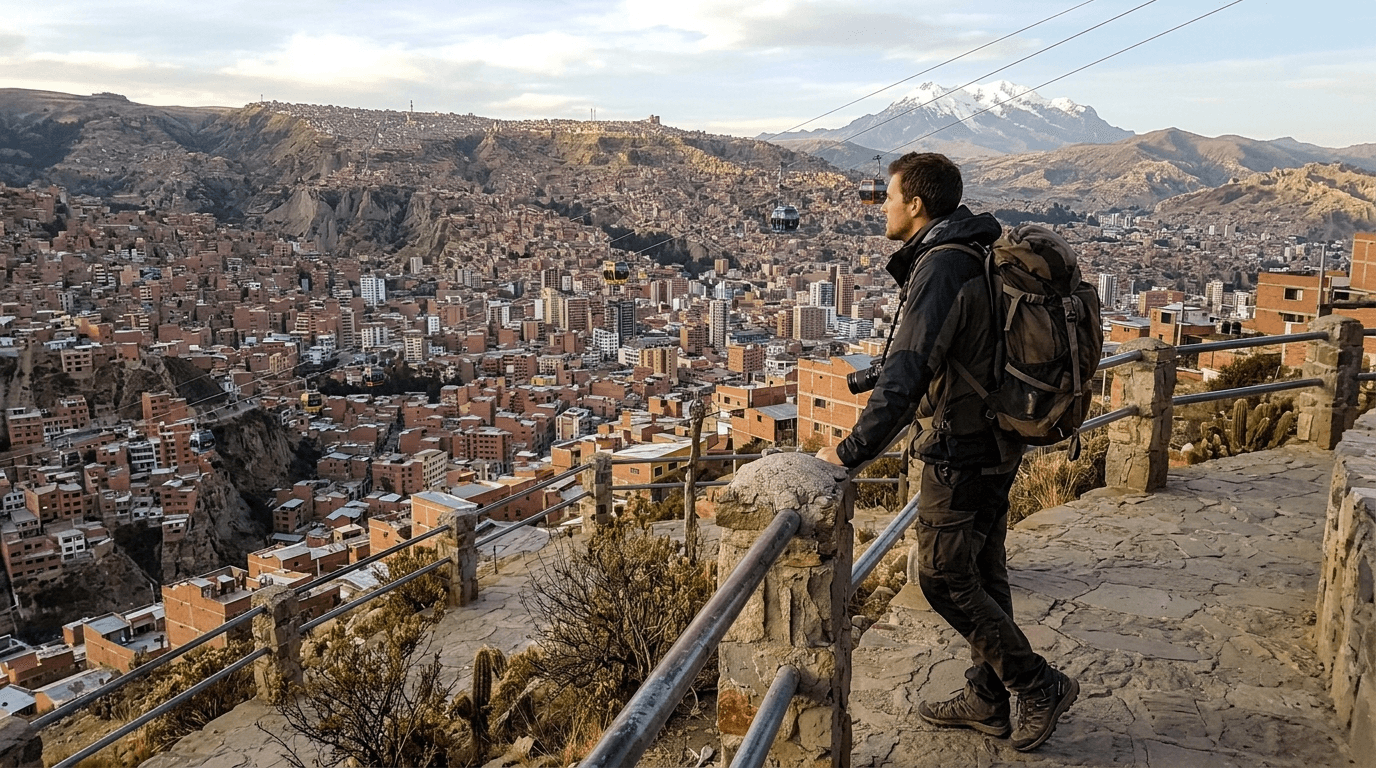
Bolivia is not the country people pick when they want an easy first trip abroad, and that is exactly why it rewards the ones who go. You get Andean cities stacked against snowcapped peaks, a lowland metropolis that feels more Caribbean than mountain, and valleys where the weather barely changes all year. If you are trying to narrow down the best cities for solo travel Bolivia has to offer, the decision comes down to three things: how your body handles altitude, how comfortable you are navigating on your own, and how you plan to move between places once you land.
This guide focuses on the cities that work best for people traveling alone, what each one is like day to day, and the practical details that make a solo trip smoother and safer.
How to Choose Among the Best Cities for Solo Travel Bolivia Has to Offer
Most countries can be ranked by sights or entertainment options. Bolivia has to be ranked by elevation first. The country rises in steps: the tropical lowlands around Santa Cruz sit at roughly 1,300 feet, Cochabamba's valley is around 8,400 feet, and La Paz spreads through a canyon at nearly 12,000 feet. That spread changes how you feel, how fast you can explore, and which order makes sense.
When you travel alone, there is no companion to notice that you are short of breath or to split a ride at midnight. That makes three questions more important than they would be on a group trip:
-
How hard is the arrival? Some airports drop you into thin air and a long drive downhill. Others put you a short, flat ride from your hotel.
-
Is the city walkable in daylight and easy to navigate after dark? Solo travelers spend more time on foot and more time making their own transport decisions.
-
Can you build a gradual route? The safest cities for solo travel are only as safe as the journeys between them, and Bolivia's roads can be unpredictable.
The three main hubs below, plus a couple of nearby escapes, cover nearly everything a first solo trip needs. If you want a broader overview of the main airports and cities in Bolivia before you build your route, start there and work outward.
La Paz: The Most Unforgettable City for Traveling Alone
La Paz is the city most people picture when they think of Bolivia. It is the seat of government, it is noisy and steep, and the views of Illimani rising above the rooftops never get old. For solo travelers, it is also one of the most social places in the country. Hostels, guided sightseeing tours, cooking classes, and day trips make it easy to meet people without trying.
What to Do Alone in La Paz
The city's cable car network, Mi Teleférico, is the best way to get your bearings. Colored lines link La Paz with El Alto above it, and a single ride gives you a view of the whole bowl of the city that you simply cannot get from the street. It is also a practical, inexpensive way to cross town during the day.
On foot, spend a morning around Plaza Murillo and the colonial lanes of Calle Jaén, which holds several small museums close together. The traditional markets near Calle Sagárnaga offer an interesting look at local crafts, textiles, souvenirs, and everyday shopping. For something outside the center, Valle de la Luna in the southern zone is a short ride away and makes an easy half-day trip.
La Paz also has one of the most interesting food scenes in South America right now. You can eat salteñas from a street stall in the morning and enjoy a set menu featuring Bolivian ingredients that night, which is a nice option when you want a good dinner without feeling odd about eating alone.
Arriving at El Alto Without the Stress
El Alto International Airport sits above 13,000 feet, making it one of the highest international airports in the world. Many flights arrive late at night or very early in the morning, which is the worst possible time to be negotiating with drivers in the cold while your head is spinning from the altitude.
This is where a prebooked private transfer earns its cost. Your driver is waiting with your name, the price is settled before you land, and you go straight down the hill to your hotel without hunting for a taxi or dragging bags through the arrivals area. Travel advisories have long warned visitors to avoid unofficial taxis in Bolivia, and that advice matters most when you are alone and exhausted.
Copacabana and Lake Titicaca: An Easy Escape From La Paz
Copacabana is a small lakeside town rather than a city, but it belongs on any list of solo travel destinations in Bolivia because it is so easy to pair with La Paz. The drive takes around three to four hours and includes a crossing at the Strait of Tiquina, where passengers ride a small boat while vehicles are floated across on wooden barges.
The town itself is relaxed and walkable. Climb Cerro Calvario for sunset over the lake, explore the town's historic architecture, and take a boat to Isla del Sol for a day or overnight among Inca ruins and terraced hillsides. Many travelers find this a good place to slow down after the intensity of La Paz.
Lake Titicaca sits even higher than La Paz, at about 12,500 feet, so give yourself a few days in the city before heading up. Booking a private car for the round trip also lets you set your own departure time, stop at viewpoints along the shore, and avoid being stuck at a bus terminal if plans change.
Santa Cruz de la Sierra: One of the Best Cities for First-Time Solo Travelers
Santa Cruz is Bolivia's largest city, and for many people it is the gentlest introduction to the country. It sits in the warm lowlands, so altitude is not an issue. The streets are flat, the pace is easygoing, and the atmosphere is modern and outward-looking. If you are nervous about your first trip alone in South America, this is one of the best cities to travel alone in Bolivia.
Viru Viru International Airport is also the country's busiest international gateway, so many visitors land here first. Arranging airport transportation in advance is a simple way to start the trip calmly, especially since the airport lies north of the city and long-haul arrivals often land after dark.
Where to Base Yourself in Santa Cruz
The historic center around Plaza 24 de Septiembre is the easiest place to start. The cathedral stands on the square, and you can climb its bell tower for a view over the red-tiled roofs. The surrounding blocks have cafés, colonial arcades, and enough activity in the daytime to feel lively without being overwhelming.
Equipetrol, to the northwest, is the city's upscale district for restaurants, shopping areas, and newer hotels. Solo travelers who want convenient dining and accommodation often prefer staying here because it keeps essential facilities within a small, well-known area. The city is laid out in rings, though, so distances are larger than they look on a map. Plan to use a prebooked car or app-based ride when traveling between neighborhoods, especially after dark.
Outside the center, Biocentro Güembé combines a butterfly dome, swimming pools, and gardens, and the Lomas de Arena dunes south of the city make a surprising half-day outing.
Day Trips: Samaipata and the Jesuit Missions
Samaipata, about 75 miles west of Santa Cruz in the foothills, is one of the most pleasant small towns in Bolivia. It is home to El Fuerte de Samaipata, a UNESCO World Heritage Site carved from a single sandstone ridge, and it serves as a gateway to Amboró National Park and its cloud forests. Plenty of travelers come for a day and end up staying three.
Farther east, the Jesuit Missions of Chiquitos are a string of 18th-century historic settlements with distinctive architecture and buildings recognized by UNESCO. The distances are long and public transport is slow, so a private driver who knows the route turns a tiring journey into a comfortable one, with the freedom to stop at whichever towns interest you most.
Cochabamba: A Relaxed Pick Among Cities for Solo Travelers
Cochabamba sits at about 8,400 feet in a fertile valley, and locals call it the city of eternal spring. It is high enough to feel the Andes but low enough that most visitors adjust quickly. Fewer foreign tourists stop here, which gives it a lived-in, unpolished charm that many solo travelers end up preferring.
Cochabamba is also known as Bolivia's food capital. Silpancho, a thin breaded steak served over rice and potatoes with a fried egg on top, and pique macho, a heaping plate featuring beef, potatoes, and vegetables, are two local specialties. Eating at the counters of La Cancha, a vast open-air market south of the center, is an experience in itself. Keep your valuables close there, as you would in any crowded market.
For the city's signature view, take the cable car up San Pedro hill to Cristo de la Concordia, a statue of Christ that stands slightly taller than the famous one in Rio de Janeiro. The rest of the city is easy to manage: the leafy Plaza 14 de Septiembre, quiet cafés, and the neighborhoods along El Prado. Jorge Wilstermann International Airport is close to the city, which makes Cochabamba a convenient middle stop between the lowlands and La Paz.
Safety Tips for Traveling Alone in Bolivia
Bolivia is not a dangerous country for visitors who stay alert, but it does reward preparation more than some of its neighbors. These are the points that matter most when you are traveling solo.
Getting Around Safely, Especially at Night
Transport is where most problems happen. Avoid hailing unmarked taxis on the street, and be particularly cautious late at night and around bus terminals. Use radio taxis called by your hotel, app-based rides where available, or prebooked private cars for any trip that matters, especially airport runs and intercity travel.
A private transfer gives you a fixed price, a driver whose details you have in advance, and a pickup time that suits you rather than a bus schedule. For solo travelers, that predictability is worth a lot. Share your trip details with someone back home, keep your phone charged, and carry a local SIM or eSIM so you can call your driver or hotel if needed.
Altitude and Health
Soroche, the local name for altitude sickness, can affect anyone regardless of fitness. Headaches, poor sleep, and breathlessness are common in the first days in La Paz. Move slowly, drink plenty of water, and consider coca tea, which is widely offered. Talk to a doctor before your trip about whether preventive medication makes sense for you.
In the lowlands, mosquitoes are the bigger concern. Use repellent, especially around Santa Cruz, and check current vaccination recommendations for the regions you plan to visit before you leave home.
Roadblocks and Current Conditions
Protests and road blockades, known locally as bloqueos, are a regular part of Bolivian life and can close highways with little notice. In 2026, a wave of protests and blockades disrupted roads and supplies in several regions for weeks. Before any overland journey, check the latest government travel advisories and local news, and ask your hotel or driver about current conditions.
This is one more reason to favor flying between major cities and using private transfers for the first and last miles. A local driver usually knows which routes are open, and you are not stranded alone on a bus that cannot move. Travel advisories have also flagged the Chapare region, which lies along the lowland road between Cochabamba and Santa Cruz, as an area to avoid, so flying that leg is the sensible choice.
A Simple Route for Your First Solo Trip to Bolivia
If you have one to two weeks, the easiest way to see the country alone is to climb gradually rather than land at the top.
Start in Santa Cruz for three or four days, including a side trip to Samaipata. Fly to Cochabamba and spend two or three days exploring local markets and regional cuisine while your body gets used to moderate elevation. Then fly to La Paz, take it slowly for the first day or two, and finish with an excursion to Copacabana and Lake Titicaca.
This order spreads the altitude across the trip, avoids the most unpredictable stretches of road, and keeps each arrival short and simple. Book a private car at each airport, and every transition becomes a quick ride to your hotel instead of a guessing game in a new city.
Frequently Asked Questions
Which city in Bolivia is best for first-time solo travelers?
Santa Cruz de la Sierra is usually the easiest starting point. It sits at low altitude, has a major international airport, and offers a modern, relaxed atmosphere with good restaurants and comfortable hotels. Cochabamba is a close second for travelers who want something more traditional without the full altitude of La Paz.
Is Bolivia safe for solo female travelers?
Many women travel through Bolivia alone without problems, and the main cities have well-established routes and accommodations for independent travelers. The usual precautions apply: avoid unofficial taxis, especially at night, choose well-reviewed accommodation in central areas, and prebook transport for late arrivals and intercity trips. Staying aware of local protests and roadblocks is just as important as personal safety habits.
How many days do I need to visit Bolivia's main cities alone?
Ten to fourteen days is a comfortable amount of time to see Santa Cruz, Cochabamba, and La Paz, with a side trip to Lake Titicaca or Samaipata. A shorter trip is possible, but cramming too much in leaves little time to adjust to altitude, which is one of the biggest factors in how much you enjoy the country.
Conclusion
The best cities for solo travel Bolivia offers each suit a different kind of traveler. Santa Cruz is the gentle start, warm and easy to navigate. Cochabamba is the quiet favorite, with mild weather and some of the best food in the country. La Paz is the showstopper, high, chaotic, and impossible to forget, with Lake Titicaca waiting just beyond it.
What ties a good solo trip together is how you move between these places. Climbing gradually, flying the longer legs, and arranging a trusted private car at each arrival takes most of the stress out of traveling alone. Transpovia can help with fixed-price airport transfers in La Paz, Cochabamba, and Santa Cruz, so you can land, meet your driver, and spend your energy on the country instead of the logistics.
"I landed in La Paz after midnight, alone and lightheaded, and the only thing I had to do was find the sign with my name on it. By the time I reached the hotel, the city lights were spread out below me and I felt ready for anything."


