
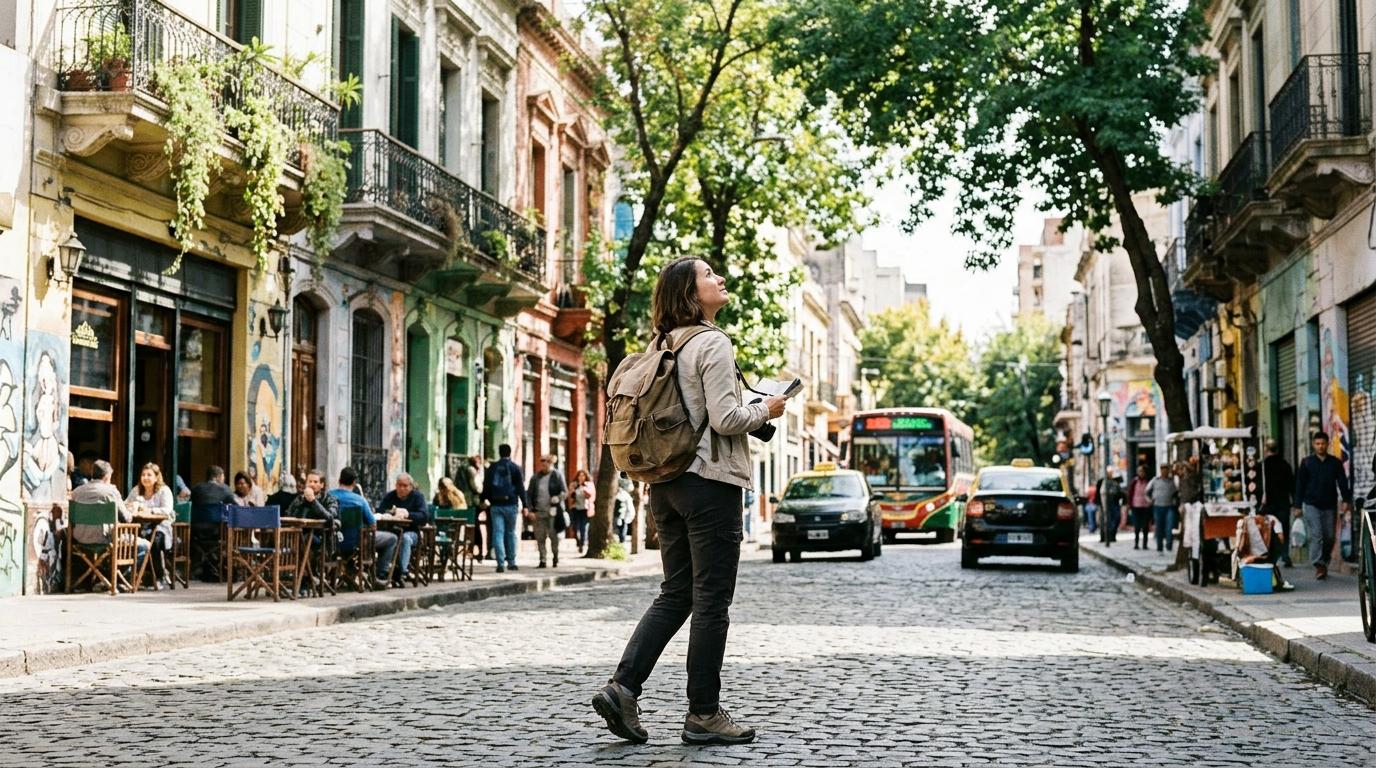
Argentina is one of those countries where traveling alone rarely feels lonely. Dinner starts late and runs long, and hiking trails in Patagonia fill with people swapping route tips at every lookout. Choosing the best cities for solo travel Argentina has to offer comes down to what kind of trip you want: exploring historic neighborhoods and cafés, discovering mountain landscapes, or spending a week among lakes, glaciers, and fresh mountain air. This guide covers six cities that work especially well when you're on your own, what makes each one easy to navigate solo, and how to plan your arrivals so the trip starts smoothly.
Why Argentina Works So Well for Solo Travelers
A few things make Argentina friendlier than many solo travel destinations in South America. Tourism infrastructure is well developed in the major cities, so you'll find a wide range of accommodation, from social hostels to quiet boutique hotels. Argentines tend to be warm and talkative, and asking for directions often turns into a conversation.
The country also lends itself to solo rhythms. Cafés expect you to linger over a single coffee for an hour. Many outdoor operators run small group tours, which makes it easy to meet people without committing to a whole trip together. And because the main cities are connected by frequent domestic flights, you can build a route that mixes urban energy with wilderness without spending days in transit.
The main adjustment is pace. Shops in smaller cities often close in the afternoon, dinner rarely starts before 9 p.m., and restaurants can remain busy well into the evening. Lean into it rather than fighting it.
The Best Cities for Solo Travel Argentina Has to Offer
Each of these cities brings something different. Some are ideal starting points, while others reward travelers who already have a trip or two under their belt.
Buenos Aires
Most international trips begin in Buenos Aires, and it's one of the best cities for first time solo travelers in the region. The city is organized into distinct neighborhoods, each with its own personality, which makes it easy to explore in manageable pieces.
Palermo is the most popular base for people traveling alone. It's leafy, walkable, packed with cafés and restaurants, and close to the Rosedal rose garden and the city's big parks. Recoleta feels more polished and residential, with its famous cemetery and grand old buildings. San Telmo has cobblestone streets, antique shops, and a Sunday street fair that draws huge crowds.
Solo-friendly activities include joining a free walking tour, exploring the city's historic landmarks, visiting Teatro Colón's architectural surroundings, and spending an afternoon in one of the classic cafés. The Subte (subway) and city buses run on a rechargeable SUBE card, so getting around is straightforward once you're settled.
Keep in mind that Buenos Aires has two airports. Ezeiza handles most international flights and sits well outside the city, while Aeroparque Jorge Newbery is close to Palermo and serves mostly domestic routes. That difference matters a lot when you're planning onward connections.
Mendoza
If you want a calmer city with a lot to do outdoors, Mendoza is a strong pick. It's known for its agricultural landscapes and regional food traditions, sitting at the foot of the Andes.
Small-group excursions to Luján de Cuyo and the Uco Valley let you explore the region's mountain scenery, traditional architecture, rural landscapes, and local attractions. The city itself is pleasant and easy to walk, with wide tree-lined streets, Plaza Independencia at its center, and the huge Parque General San Martín on its western edge.
Beyond its regional cuisine, Mendoza is the jumping-off point for the Aconcagua area, home to the highest mountain in the Americas, along with rafting, horseback riding, and hot springs at Cacheuta. If you're visiting in late summer, you can explore seasonal agricultural markets and discover regional food products.
Flights land at Mendoza's El Plumerillo airport, a short drive north of the center. Many travelers arrive here after a domestic connection, so pre-booking airport transportation is a simple way to skip the taxi line and head straight to your hotel or accommodation.
Córdoba
Córdoba is Argentina's second-largest city and one of its most underrated solo travel destinations. It's a university city with a large student population, which gives it a young, social, affordable feel, especially around the Nueva Córdoba and Güemes neighborhoods.
The historic center is compact and easy to explore on foot. The Jesuit Block, a UNESCO World Heritage Site, includes colonial churches and one of the oldest universities in the Americas. Güemes comes alive on weekends with an artisan market, independent shops, and local restaurants.
Córdoba also works as a base for day trips into the Sierras de Córdoba. Alta Gracia, with its Jesuit estancia and the childhood home of Che Guevara, and the Alpine-style village of Villa General Belgrano are both popular, and there's good hiking in the hills when you need a break from the city.
Bariloche, Río Negro
San Carlos de Bariloche sits on the shore of Lake Nahuel Huapi inside Argentina's oldest national park, and it's one of the best cities to travel alone if nature is your priority. The town has a Swiss-chalet look, a steady flow of backpackers and hikers, and a long main street lined with chocolate shops.
In summer, solo travelers can easily fill a week with hiking, kayaking, and cycling. The Circuito Chico loop is a classic bike route with lake views around every bend, and the chairlift up Cerro Campanario delivers one of the most photographed panoramas in Patagonia. More experienced hikers head to Refugio Frey, a mountain hut beneath granite spires. In winter, Cerro Catedral becomes one of South America's major ski areas.
Bariloche's social hostels and organized excursions make it simple to find hiking partners, and the town feels relaxed and manageable on foot. The airport sits several kilometers east of town, and many lakeside hotels are spread along the road toward the Llao Llao peninsula, so it helps to know exactly how you'll get from the terminal to your accommodation.
Puerto Iguazú, Misiones
Puerto Iguazú is a small town that exists largely because of one extraordinary attraction: Iguazú Falls, a UNESCO World Heritage Site and one of the largest waterfall systems on the planet. It's an easy place for solo travelers because almost everyone is there for the same reason, and conversations start naturally on the trails and boat rides.
Inside Iguazú National Park, a network of walkways leads to viewpoints above and below the falls, with the Devil's Throat (Garganta del Diablo) as the dramatic highlight. Plan for at least one full day on the Argentine side, starting early to beat the heat and the crowds. Many travelers also cross to the Brazilian side for the wide panoramic view. Back in town, the Hito Tres Fronteras marks the point where Argentina, Brazil, and Paraguay meet across the rivers.
The climate is subtropical, so expect heat, humidity, and sudden downpours. The Cataratas del Iguazú airport lies outside town, closer to the national park, which makes a pre-arranged ride especially convenient if you land in the evening.
Ushuaia, Tierra del Fuego
Often called the southernmost city in the world, Ushuaia feels like the edge of the map, in the best possible way. It's a compact port town set between the Martial Mountains and the Beagle Channel, and it's popular with solo travelers heading to Antarctica or finishing a long Patagonia trip.
Boat trips on the Beagle Channel pass sea lion colonies and the Les Eclaireurs lighthouse. Tierra del Fuego National Park offers coastal trails and forested hikes just outside town, and the End of the World Train runs into the park on a historic route. Laguna Esmeralda is a favorite half-day hike, though the trail can get very muddy.
Ushuaia is best for travelers who are comfortable with changeable weather and higher prices. Summer brings long daylight hours, while winter turns the area into a snow destination. Because the town is small and walkable, the main logistical challenge is usually getting there and back, so plan your flights and airport transfers early, especially around cruise departures.
Which City Fits Your Solo Travel Style?
If you're still deciding, this quick comparison can help you match a city to the kind of trip you have in mind.
|
City |
Best for |
Pace |
Good for first-timers? |
|
Buenos Aires |
Culture, architecture, food |
Fast |
Yes |
|
Córdoba |
Student life, history, budget travel |
Moderate |
Yes |
|
Bariloche |
Hiking, lakes, skiing |
Active |
Yes |
|
Puerto Iguazú |
Waterfalls, jungle scenery |
Short stay |
Yes |
|
Ushuaia |
Remote landscapes, Antarctica access |
Slow, outdoorsy |
Better with some experience |
For a first trip, Buenos Aires plus one or two of Mendoza, Bariloche, or Iguazú makes a well-balanced route. Ushuaia fits best as an add-on once you're comfortable with the country's distances and weather.
Staying Safe as a Solo Traveler in Argentina
Argentina's main tourist cities are among the more comfortable places in South America to explore alone, but they aren't free of risk. In Buenos Aires especially, petty theft is the most common problem. Phones snatched from café tables or by passing motorcycle riders are a well-known issue, so keep your phone in hand only when you need it and away from the curb.
A few habits make a real difference:
-
Carry only the cash and cards you need for the day, and leave your passport locked at your accommodation.
-
Be extra alert in crowded spots like markets, bus stations, and busy transit lines.
-
Share your itinerary and accommodation details with someone at home.
-
Choose accommodation with strong recent reviews from other solo travelers, and check how far it is from the areas you plan to visit at night.
-
Avoid hailing random cars at airports and bus terminals. Use official taxi stands or a ride you've booked in advance.
Smaller cities like Mendoza, Bariloche, Puerto Iguazú, and Ushuaia generally feel calmer, which is part of why they appear on so many lists of the safest cities for solo travel in the region. Normal precautions still apply, particularly late at night.
Arriving Alone: Why a Private Airport Transfer Makes Sense
The moment you land is often the most stressful part of a solo trip. You're tired, possibly navigating a language you're still learning, juggling luggage, and trying to figure out which ride is legitimate. Argentina's long-haul arrivals add to this, since many international flights land early in the morning after an overnight journey, and domestic connections can run late into the evening.
A pre-booked private transfer removes most of that friction. A driver meets you at arrivals, you know the price before you travel, and you don't have to negotiate, hunt for cash, or decide on the spot whether a ride is safe. For solo travelers, that sense of control matters. Your accommodation, the vehicle, and the route are confirmed before you even board the plane, and someone at home can know exactly how you're getting from the terminal to your hotel.
This is especially useful in a few situations covered above: the long drive from Ezeiza into Buenos Aires, late arrivals in Puerto Iguazú, where the airport sits well outside town, and Bariloche, where lakeside hotels can be spread out along the shore. Booking through Transpovia lets you arrange a private car ahead of time, so the first hour of your trip is a quiet ride into the city instead of a scramble at the curb.
Planning a Multi-City Solo Route
Argentina is enormous, and the distances between its highlights catch many first-time visitors off guard. Flying is the practical way to link most of these destinations. Buenos Aires works as the central hub, with domestic flights from Aeroparque reaching Mendoza, Córdoba, Bariloche, Puerto Iguazú, and Ushuaia.
Long-distance buses are an option for shorter legs, and Argentina's overnight coaches are known for their reclining seats. For most travelers on a limited schedule, though, a mix of domestic flights and planned airport transfers saves days of travel time.
A sample two-week solo route could look like this: four nights in Buenos Aires, three in Iguazú, three in Mendoza, and four in Bariloche. Swap Mendoza for Córdoba if you'd rather explore a historic university city, or add Ushuaia at the end if you have more time. If you're still mapping out your options, it's worth browsing the full range of cities in Argentina before locking in flights.
Seasons matter too. Argentina is in the Southern Hemisphere, so summer runs from December to February. That's the best time for Patagonia and Ushuaia, while Bariloche's ski season falls in the southern winter. Spring and fall are lovely in Buenos Aires and Mendoza, and Iguazú is pleasant outside the hottest summer weeks.
Frequently Asked Questions
Is Argentina a good destination for solo female travelers?
Many women travel through Argentina alone and find it welcoming, particularly in popular tourist cities like Buenos Aires, Mendoza, and Bariloche. Street harassment in the form of comments can happen in big cities, and petty theft is the most common concern. Staying in well-reviewed accommodation, keeping valuables out of sight, and arranging trusted transport for late arrivals all help you travel with more confidence.
Which Argentine city is best for first-time solo travelers?
Buenos Aires is usually the best starting point. It has the widest choice of accommodation, plenty of group activities like walking tours and cultural visits, and good public transit. Mendoza and Bariloche are also excellent choices for a first trip because they're manageable in size and full of small group tours where meeting other travelers comes naturally.
How many days do I need to visit several cities in Argentina alone?
Two weeks is a comfortable amount of time to see three or four destinations without rushing. That gives you time for Buenos Aires plus a mix of waterfalls and Patagonia. With only a week, focus on Buenos Aires and one other city to avoid spending most of your time in airports.
Conclusion
Argentina rewards solo travelers with variety. In a single trip, you can go from exploring Buenos Aires' historic neighborhoods and cafés to discovering Mendoza's mountain scenery and regional cuisine, from the student energy of Córdoba to the lakes of Bariloche, the roar of Iguazú Falls, and the windswept edge of the continent in Ushuaia. Each city offers its own way to meet people, and each is easy to enjoy on your own terms.
The key to a good solo trip here is planning the transitions. Build a realistic route, give each city enough time, and sort out how you'll get from each airport to your accommodation before you land. Get those details right, and you'll spend your trip focused on the places themselves instead of the logistics.
"I landed in Mendoza at night not knowing a word of Spanish, and seeing a driver waiting with my name on a sign took all the stress away. By the next afternoon I was exploring the city's parks and historic streets with four other travelers."


