
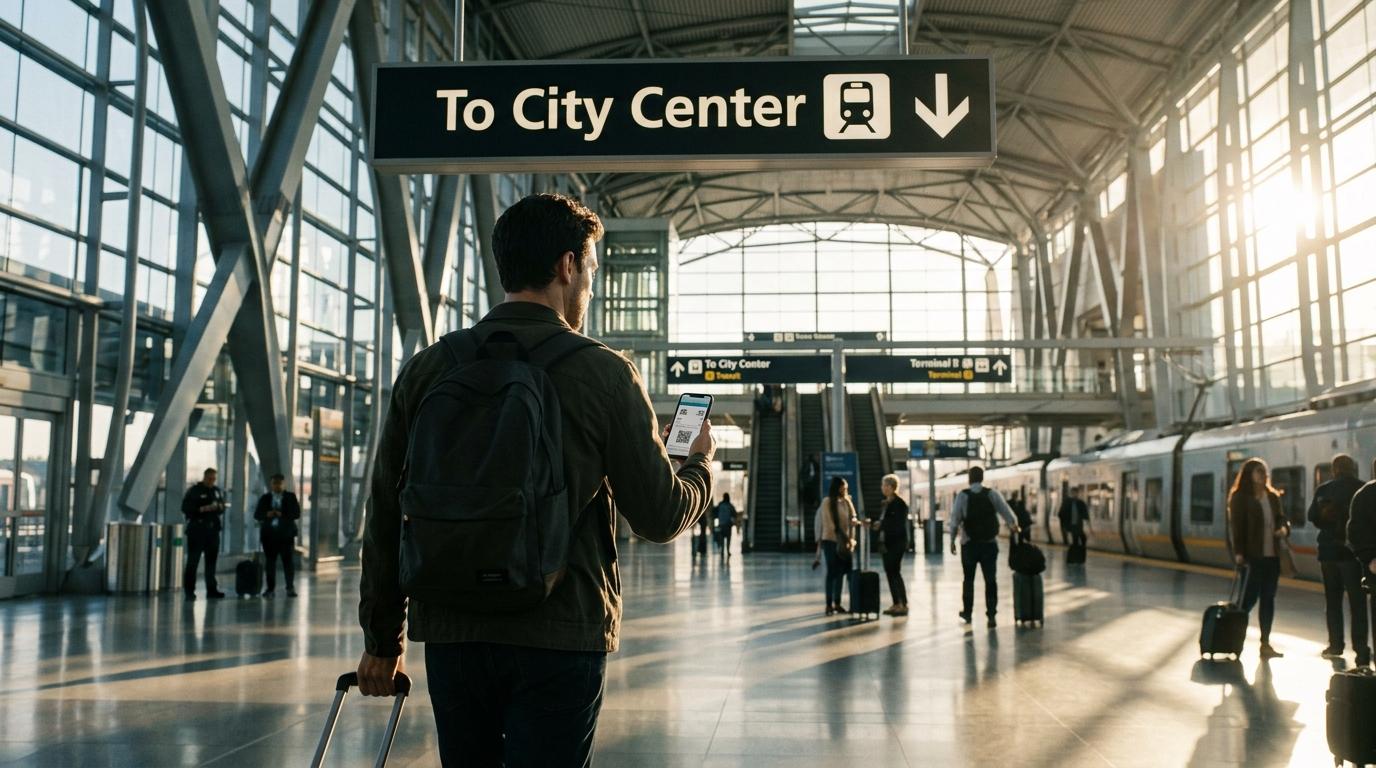
You've just stepped off a long flight. Your phone is at 12%, you don't speak the language, and someone near the arrivals exit is already asking, "Taxi? Good price." That moment is when many travelers get overcharged. Knowing the best alternatives to taxis at airports to avoid scams before you land changes everything. Instead of reacting on the spot, you walk out with a plan, a confirmed fare, and a clear idea of where to go.
This guide covers the most reliable airport transportation alternatives, how each one protects you from common rip-offs, and how to pick the right option for your trip, your budget, and the time you arrive.
Why Airport Taxis Are a Common Target for Scams
Most licensed airport taxi drivers are honest. The problem is that airports bring together everything a scammer looks for: tired visitors, heavy luggage, unfamiliar currency, and people who don't know the local rates or the roads. Arrivals halls also draw unlicensed operators who know that a confused traveler is easy to talk into a ride.
The tricks repeat from one city to the next:
-
Touts in the arrivals hall. Someone walks up inside the terminal and offers a ride. Licensed taxis usually wait at an official rank outside and don't send drivers in to find passengers.
-
The "broken" meter. The driver says the meter isn't working and names a flat price that turns out to be several times the normal fare.
-
The scenic route. A metered ride gets longer because the driver takes a detour, counting on the fact that you don't know the city.
-
Surprise surcharges. Extra charges appear at drop-off for luggage, late-night travel, tolls, or "airport fees" that were never mentioned.
-
Currency confusion. The quoted price was in local currency, but the driver now says it was in dollars or euros, or gives change in a currency you can't easily check.
-
Fake company desks. In some airports, counters that look official are really resellers charging inflated rates.
What these scams have in common is that the price isn't settled before you get in the car. The best alternatives to airport taxis fix exactly that.
The Best Alternatives to Taxis at Airports to Avoid Scams
Every option below lowers your risk in a different way: a fixed price, a regulated system, a digital trail, or simply no negotiation at all.
Pre-Booked Private Airport Transfers
A pre-booked private transfer is the closest thing to removing the arrival-hall gamble entirely. You choose your vehicle, enter your flight details, and pay or confirm a total price before you travel. When you land, a driver is assigned to you by name, often with a sign at the arrivals exit or a clearly agreed meeting point.
This option protects you in a few important ways. The fare is set in advance, so there's no meter to manipulate and no price talk at the curb. You get the driver's details and pickup instructions before you arrive, which makes it easy to spot anyone pretending to be your ride. And reputable services track your flight, so a delay doesn't leave you stranded or paying waiting charges you didn't expect.
Private airport transfers work especially well for families with luggage and car seats, groups that need a van, anyone landing late at night, and travelers arriving in a country where they don't speak the language. Booking platforms like Transpovia arrange airport transfers with all-inclusive pricing and flight monitoring across many destinations, so the price you see when booking is the price you pay at pickup.
The tradeoff is cost. For a solo traveler with a backpack, a private car may cost more than the train. For two or more people, or for anyone with bags, the gap often narrows quickly.
Rideshare Apps in Designated Pickup Zones
Apps like Uber, Lyft, Bolt, Grab, Careem, and DiDi, depending on the region, show an estimated or upfront fare before you confirm. Every trip also leaves a record that includes the driver's name, license plate, route, and payment. That digital trail is a strong deterrent against detours and invented charges.
Rideshare does have a few weak spots at airports. Some airports restrict or ban app-based pickups, and rules can change, so check before you fly. Surge pricing during busy periods can push fares higher than a fixed transfer. Scammers also take advantage of rideshare, sometimes approaching travelers while claiming to be "your Uber." Only get into a car after you've matched the plate, vehicle, and driver name in the app, and always go to the airport's official rideshare pickup area rather than accepting a ride at the curb.
You'll also need working mobile data when you land, which brings up a practical point: setting up a travel eSIM before departure saves you from relying on airport Wi-Fi to book your ride.
Airport Rail Links and Metro Lines
Many major airports have direct train connections into the city, such as dedicated express trains or regular metro lines that stop at the terminal. Fares are posted and set by the operator, tickets come from machines or official counters, and there's no driver to bargain with.
Trains are often the fastest way into a city center during rush hour. They make the most sense when you're traveling light, your hotel is near a station, and you're arriving during normal operating hours. They're less practical late at night when service may stop, when you're carrying several suitcases, or when your final stop is far from the line.
One caution: a few rail links have premium express trains running alongside cheaper regular services on similar routes. Neither is a scam, but it's worth comparing before you buy.
Official Airport Shuttles and Express Buses
Airport express buses connect terminals with city centers, main train stations, and nearby towns. Like trains, they run on published schedules with fixed fares, which removes most of the opportunity for overcharging. They usually have dedicated luggage space and are among the cheapest airport transportation options available.
Buy tickets from the official desk, the driver, or the operator's own app, not from people selling "tickets" in the terminal. Bus travel takes longer than a car, and you may still need a short final ride from the drop-off point to your accommodation.
Hotel Shuttles and Accommodation-Arranged Pickups
Many airport hotels run free or low-cost shuttles, and some city hotels, resorts, and guesthouses can arrange a pickup for you. Because the ride is tied to your booking, the hotel is accountable for the driver and the price.
Confirm the details in writing before you travel, including the price, the meeting point, the driver's contact number, and how to find them. Some hotels simply pass you to a local taxi company, which is fine as long as the fare is agreed in advance and the hotel stands behind it.
Shared-Ride Shuttle Vans
Shared shuttles group passengers going to similar areas and drop each one off along a route. They cost less than a private car and are usually pre-booked at a fixed per-person fare. The main downsides are waiting for the van to fill and making several stops before yours. That's fine for a relaxed afternoon arrival, but frustrating after an overnight flight.
Prepaid or Official Taxi Counters
If a taxi really is the most practical choice, the safest version is often the airport's own prepaid taxi counter or official taxi rank. At prepaid counters, which are common in parts of Asia, the Middle East, and elsewhere, you pay a set fare for your destination zone and get a receipt to hand to the driver. Official ranks are supervised and often post fare information.
This isn't strictly an alternative to a taxi, but it moves the price decision from the driver to the airport. Make sure the counter is inside the official arrivals area and clearly run by or approved by the airport.
Rental Cars
Picking up a rental car removes the need for a driver entirely. It's a sensible choice if you're planning a road trip, staying somewhere rural, or need flexibility for several days. For a straightforward airport-to-hotel trip in a big city, though, rentals often add parking costs, fuel, tolls, unfamiliar traffic rules, and the stress of driving after a long flight. Book with a recognized company and read the fuel and insurance terms closely, since upsells at the counter are a common complaint.
Comparing Airport Transfer Options
|
Option |
Price Set in Advance |
Best For |
Main Drawback |
|
Private airport transfer |
Yes |
Families, groups, late arrivals, first-time visitors |
Higher cost for solo travelers |
|
Rideshare app |
Upfront estimate in most markets |
Tech-comfortable travelers with mobile data |
Surge pricing, airport restrictions, impostors |
|
Train or metro |
Yes, published fare |
Light packers heading downtown |
Limited hours, transfers with luggage |
|
Airport bus |
Yes, published fare |
Budget travelers |
Slower, may need a final ride |
|
Hotel shuttle |
Usually |
Airport hotel stays |
Only covers one destination |
|
Shared shuttle |
Yes, per person |
Solo travelers on a budget |
Waiting and multiple stops |
|
Prepaid taxi counter |
Yes |
When a taxi is the only practical option |
Still requires checking you're at the right counter |
|
Rental car |
Daily rate, plus extras |
Road trips and rural stays |
Parking, fuel, and counter upsells |
How to Choose Safe Airport Transportation for Your Trip
The right choice depends less on which option is "best" overall and more on your situation when you land.
Arriving late at night. Public transit may have stopped, and empty terminals are where unlicensed drivers stand out most. A pre-booked transfer or a rideshare from the official pickup zone is the safer choice.
Traveling with kids or lots of luggage. Dragging bags through stations with tired children wears everyone out. A private transfer lets you request the right vehicle size, and many services can arrange child seats if you ask in advance.
Visiting a country for the first time. If you don't know the local currency, language, or normal fares, having the price settled before departure removes most of the guesswork.
Traveling on a tight budget. Trains and express buses are hard to beat on cost. Check operating hours against your arrival time, and keep a backup plan in case your flight lands after the last service.
Traveling for business. Predictability usually matters more than saving a little money. A fixed-price transfer with a receipt makes expense reports simple and means you don't have to plan the ride while checking email.
Safety Habits That Work With Any Option
Even the safest transportation choice works better with a few good habits.
Research your destination airport before you fly. Look up where the official taxi rank, rideshare zone, train station, and transfer meeting point are, and save that information offline. Knowing the layout means you won't have to stop and look lost in the arrivals hall, which is exactly what touts watch for.
Turn down anyone who approaches you inside the terminal, however friendly they seem. A simple "No thanks, I'm already booked" and continuing to walk works almost everywhere.
If you've booked a private pickup, read the meeting instructions carefully before you land. Some drivers wait just past customs with a name sign, while others meet at a numbered door or a designated pickup lane. Transpovia's airport pickup guide explains how the meet-and-greet process works so you know what to expect when you walk out.
A few more habits worth keeping:
-
Share your trip details or live location with someone you trust.
-
Keep valuables and your passport on you, not in the trunk.
-
Pay by card or through an app when possible, and keep receipts.
-
Write down the vehicle's plate number before you get in.
-
If anything feels off, such as a different car, a different name, or pressure to pay cash, don't get in.
Frequently Asked Questions
Is it cheaper to pre-book an airport transfer than take a taxi?
It depends on the city, the distance, and how many people are traveling. For solo travelers, a taxi with a fair meter can sometimes cost less. For families and groups, a pre-booked transfer is often competitive or cheaper because you pay per vehicle, not per person. Its real value is certainty: the price doesn't change because of traffic, detours, or extra charges at drop-off.
Are rideshare apps safe to use at airports?
Generally yes, as long as you use the airport's official pickup area and verify the license plate, car model, and driver name in the app before getting in. Many rideshare problems at airports involve impostors claiming to be your driver, not the app itself. Also check whether rideshare pickups are allowed at your arrival airport, since rules vary.
What should I do if someone in the arrivals hall offers me a ride?
Politely decline and keep walking toward your planned option, whether that's the official taxi rank, the rideshare zone, the train, or your pre-arranged driver. Licensed services rarely look for passengers inside the terminal. If you feel pressured, approach an airport information desk or staff member.
Conclusion
Most airport scams depend on one thing: a traveler who hasn't decided how they're getting out of the airport. Once your ride is chosen and your price is settled before you land, most of those tricks stop working.
For door-to-door convenience and predictable costs, a pre-booked private transfer is the most reliable option, especially for families, late arrivals, and first-time visitors. Trains and express buses are the best budget choice when schedules match your arrival. Rideshare apps offer flexibility if you stay in the official pickup zone and verify every detail. Whatever you choose, a few minutes of planning before your flight is the best protection you have.
"The first time I walked straight past the drivers calling out prices and found someone holding a sign with my name, I realized how much stress I'd been carrying at every arrival."


