
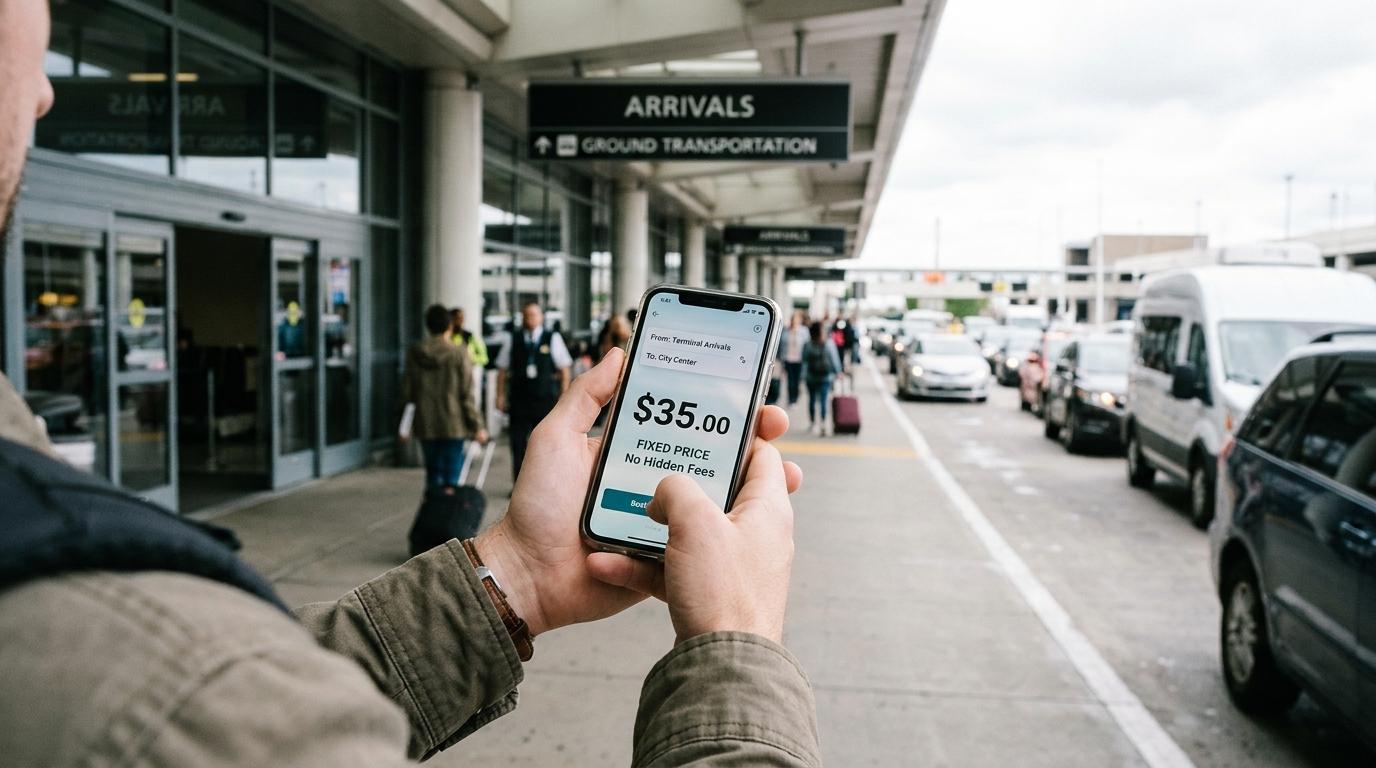
You land, clear the gate, and the last thing you want is a surprise at the curb. Yet the airport transfer price quoted for the same 20-mile ride can swing widely depending on who you book with, when you travel, and what the fare actually includes. A shared shuttle, a metered taxi, a rideshare app, and a pre-booked private car will all get you to your hotel, but each one builds its fare in a different way.
Knowing what drives the airport transfer cost lets you compare quotes honestly instead of grabbing the lowest number on the screen. Below, we break down the factors that shape the final fare, from mileage and vehicle class to late-night pickups and toll roads, and explain why a fixed, all-inclusive private transfer is often the most predictable choice for families, groups, and anyone arriving on a tight schedule.
What Goes Into an Airport Transfer Price?
Every fare, no matter who quotes it, has to cover the real cost of putting a car and a driver at the terminal. That includes the driver's time (often starting well before pickup), fuel or charging, vehicle maintenance, commercial insurance, licensing and permits, any fees the airport charges operators, and the booking platform's cut. Whatever is left over is the operator's margin.
How those costs reach you depends on the pricing model:
-
Flat or zone-based fares. You pay a set price from the airport to a specific area, such as downtown or a resort strip. Many private transfer companies and some city taxi systems work this way.
-
Distance and time-based fares. A meter or app calculates the fare from miles driven and minutes spent, so traffic and detours raise the total.
-
Hourly rates. Common for chauffeur services and multi-stop trips, where you pay for the vehicle's time rather than a single route.
-
Per-seat fares. Shared shuttles charge each passenger separately, which keeps solo fares low but adds stops and waiting.
The model matters as much as the number. A flat private fare locks in your cost before you travel, while a metered or app-based fare is only an estimate until you arrive.
Distance, Route, and Drive Time
Mileage is the starting point for almost any quote. The farther your hotel, vacation rental, or cruise port sits from the terminal, the more you'll pay. Resort areas are a good example: some popular beach towns are an hour or more from the nearest international airport, so the transfer can cost far more than a short hop into a downtown hotel.
Distance isn't the whole story, though. A 15-mile crawl through a dense city center at rush hour can tie up a driver longer than a 30-mile run on an open highway. That's why metered taxis and rideshare fares climb in heavy traffic, while a pre-booked private transfer already has the expected drive time built into its fixed price.
A few route details also change the math:
-
Extra stops. Dropping a colleague at a second hotel or stopping at a grocery store usually adds a fee or pushes the trip into an hourly rate.
-
Round trips. Booking your arrival and departure together is simpler to manage, and some providers price the return leg more favorably.
-
Pickup location. Remote terminals, private aviation facilities, and cruise terminals can involve longer access routes or different pickup rules than the main arrivals area.
Vehicle Type and Group Size
The car you book has a direct effect on the fare. A standard sedan is usually the most affordable private option, followed by SUVs, minivans, passenger vans, and minibuses. Executive and luxury vehicles sit at the top of the range because of higher purchase, insurance, and upkeep costs.
The key detail many travelers miss is that private transfers are priced per vehicle, not per person. A shared shuttle charges every seat, so a family of five pays five fares. A private van carries the whole group for one price, which often narrows the gap with shuttles and sometimes beats them, especially once you factor in the time saved by skipping other passengers' stops.
Luggage counts too. Two adults with carry-ons fit easily in a sedan, but add a stroller, a set of golf clubs, skis, or several large suitcases and you may need the next size up. Giving the operator accurate passenger and bag counts at booking keeps you from being turned away at the curb or charged for an upgrade on the spot.
How Timing Affects Airport Transfer Rates
When you travel can matter almost as much as where you're going. Airport transfer rates tend to shift with demand, and the way each service handles that shift is very different.
Rideshare apps use dynamic pricing, so fares rise when many people request rides at once. A cluster of international arrivals, a canceled flight bank, a major sporting event, or a rainstorm can all push prices up within minutes. Some taxi systems and private operators add set surcharges instead, typically for late-night or early-morning pickups and major holidays, but those are known in advance rather than calculated at the curb.
Season plays a role as well. Peak travel periods like summer vacation, spring break, and the winter holidays put more pressure on the local fleet, especially in resort destinations. Booking a private transfer ahead of time locks in your fare and your vehicle before demand peaks. Waiting until you land leaves you with whatever is available at that moment, and at whatever price the market sets.
Fees and Extras That Raise the Final Fare
The base fare is only part of the picture. These are the charges that most often separate the price you see from the price you pay.
Airport Access Fees and Parking
Many airports charge ground transportation companies a fee for each pickup or drop-off. Rideshare apps usually pass it along to riders as a separate line item. Private drivers who come inside to meet you may also pay for short-term parking. A transparent quote either includes these costs or lists them clearly.
Tolls
Toll roads, bridges, and tunnels are common on airport routes. With a meter or app, tolls are typically added to your fare after the ride. An all-inclusive private quote should already account for them, so it's worth confirming before you book.
Waiting Time and Meet-and-Greet
Flights land early, land late, and sometimes sit at the gate. Many private transfer providers include a set window of free waiting time after landing, plus a meet-and-greet service where the driver waits in arrivals with a name sign. Extra waiting beyond that window, or a pickup that has to be rebooked, can add to the cost.
Child Seats, Extra Luggage, and Gratuity
Child safety seat rules vary by state and country, and some operators charge a small fee for each seat. Oversized items may require a larger vehicle. In the US, tipping your driver is customary, so check whether a prepaid fare already includes gratuity or whether you're expected to add it.
Taxi, Rideshare, Shuttle, or Private Car: How Each Sets Its Price
Comparing options by sticker price alone can be misleading, because each one carries a different level of certainty about what you'll actually pay.
|
Option |
How the fare is set |
Price certainty |
Best suited to |
|
Taxi |
Meter, or a flat rate on some city routes |
Medium; traffic and tolls can add up |
Short trips when the line is moving |
|
Rideshare app |
Upfront quote with dynamic pricing |
Low at busy times; surges are common |
Solo travelers with light luggage |
|
Shared shuttle |
Per-seat fare |
High, but with extra stops |
Budget solo trips with flexible timing |
|
Private transfer |
Fixed price per vehicle, agreed at booking |
High; the quote is the fare |
Families, groups, late arrivals, business trips |
A private transfer isn't always the cheapest line on paper, especially for one person traveling light. Where it pulls ahead is predictability. The price is settled before you fly, the car is sized for your group, the driver tracks your flight, and nobody is watching a meter tick while you sit in traffic. For a family landing after a long flight, or a business traveler heading straight to a meeting, that certainty is part of the value.
Why Airport Transportation Cost Varies by Destination
The same type of ride can cost very different amounts from one country, or even one city, to the next. Local wages, fuel prices, vehicle import costs, insurance requirements, and licensing rules all feed into what operators charge. Airports also set their own fees and pickup rules, and some cities regulate airport fares directly.
Geography adds another layer. A major hub close to downtown keeps fares modest, while airports that serve spread-out resort regions or island destinations often mean long drives and higher prices. Currency exchange rates can shift the final amount too, so it helps when a provider shows the fare in your home currency before you pay.
If you're planning a trip, checking prices across different transportation destinations is a quick way to see how much location shapes the fare and to budget realistically before you book flights or hotels.
How to Get a Fair Airport Transfer Fare
A good deal is a fare that matches the service you actually get, with nothing hidden. These habits make that much easier to find:
-
Compare total prices, not base fares. Ask whether tolls, airport fees, waiting time, and gratuity are included.
-
Share accurate details. Passenger count, luggage, child seats, and your flight number all affect the vehicle and the quote.
-
Book ahead. Advance booking secures a vehicle and a fixed rate before peak demand hits.
-
Check the waiting and cancellation policies. Know how long the driver will wait if your flight is delayed and what happens if your plans change.
-
Skip the arrivals-hall offers. Unofficial drivers who approach travelers inside terminals may be unlicensed and uninsured, and their prices are often negotiated on the spot.
This is where pre-booked private transfers make comparison simple. Transpovia, for example, shows all-inclusive airport transfer pricing before you book, works with vetted local operators, and tracks your flight so the pickup adjusts if you land early or late. You know the fare, the vehicle, and the meeting point before you ever leave home.
Frequently Asked Questions
How much does an airport transfer cost?
There's no single answer, because the price depends on distance, vehicle size, time of day, local rates, and what the fare includes. The most reliable way to know is to get a fixed quote for your exact route, passenger count, and luggage. Comparing a few all-inclusive quotes for the same trip will show you the realistic range for that airport.
Is a private airport transfer more expensive than a taxi?
For a solo traveler on a short route, a taxi can cost less. For families and groups, a private vehicle priced per car often comes out close to, or below, the cost of multiple taxis or shuttle seats. A private transfer also sets the fare in advance, so traffic delays and tolls don't push the total higher after the ride.
Will the price change if my flight is delayed?
With a metered taxi or rideshare app, you'll pay whatever the rate is when you finally land, including any surge. With a pre-booked private transfer that tracks your flight, the pickup time usually moves with your arrival and the fare stays the same. Check the provider's waiting policy to confirm how delays are handled.
Conclusion
An airport transfer price is the sum of many moving parts: how far you're going, how many people and bags you're bringing, when you land, which fees apply, and how the provider sets its fare. Once you can see those pieces, it becomes much easier to tell a genuinely good quote from one that only looks cheap.
For most families, groups, and travelers who value a smooth arrival, a pre-booked private transfer offers the clearest deal. You agree on the price before you fly, the vehicle fits your party, and a delayed flight doesn't turn into a bigger bill. That kind of certainty makes the first hour of any trip a lot easier.
"Our flight landed almost two hours late with two tired kids in tow, and the driver was still standing there with our name on a sign. The price was exactly what we booked, not a dollar more." — A mom of two arriving for a family vacation


