
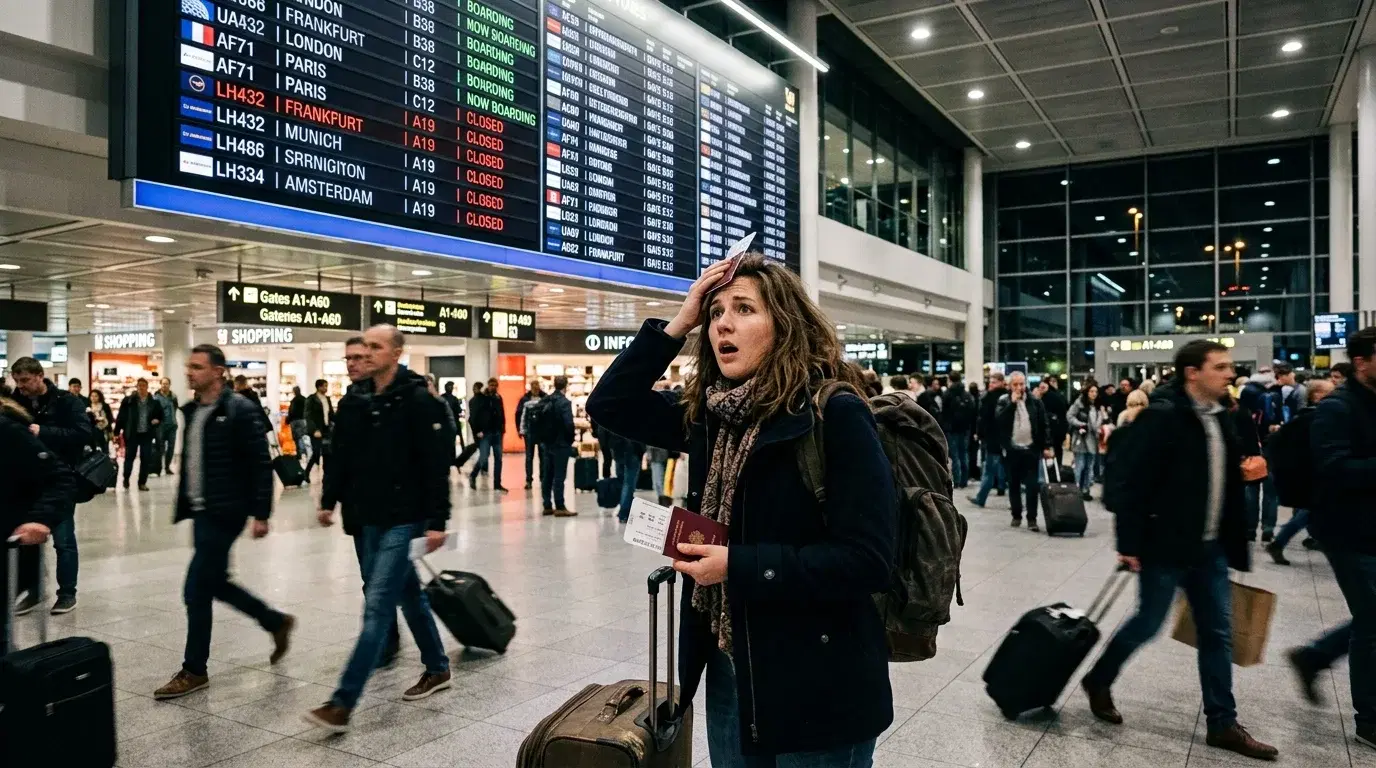
Airport mistakes to avoid tend to fall into a few repeatable categories: timing misjudged, liquids packed wrong, and connections booked tighter than the airport can actually deliver. None of these require years of travel experience to avoid, just knowing where first-time flyers most often get caught off guard. Understanding these patterns before departure day prevents the kind of scramble that turns an exciting first flight into a stressful one.
Cutting Arrival Time Too Close
Arriving right at the recommended minimum, rather than building in a buffer, is one of the most common first-time mistakes. TSA recommends arriving at least two hours before a domestic flight and three hours before an international one, but that window assumes security, check-in, and walking to the gate all go smoothly.
First-time travelers often underestimate how long finding a gate, navigating an unfamiliar terminal, or waiting for a rental car return or parking shuttle can add. Treating the recommended arrival time as a floor, not a target, leaves room for whatever does not go according to plan.
Packing Liquids the Wrong Way
Liquids cause more security delays for first-time travelers than almost anything else. Every liquid, gel, aerosol, or cream in a carry-on needs to fit in a container of 3.4 ounces or less, with all containers fitting inside a single clear, quart-sized bag, and the container size is what's measured, not how much product remains inside, so a half-empty six-ounce bottle still gets confiscated.
Duty-free liquids add a second layer of confusion on international trips. Duty-free liquids purchased internationally can be carried in a carry-on above the standard limit only if they're packed in a secure, tamper-evident bag by the retailer, undamaged, and accompanied by a receipt from within 48 hours. Some countries, including Japan, don't accept the standard tamper-evident duty-free bag format at all, so liquids bought before a connection through those airports may not clear the next security checkpoint. First-time travelers who buy duty-free liquids without checking the connection rules ahead may risk losing them at the next security checkpoint.
Booking Connections Too Tight
A layover that looks generous on a booking site can be far tighter in practice. Minimum connection times are set by each airport and vary by terminal, airline, and route, typically running 30 to 90 minutes for domestic connections and up to three hours for international ones.
International-to-domestic connections carry their own timing trap that catches many first-time travelers by surprise. Flying internationally into the U.S. before a connecting domestic flight requires clearing immigration and customs, then rechecking any bags, which is why at least three hours is the safer minimum for that specific connection type. Booking the shortest layover a search engine will sell, without checking whether it accounts for a terminal change or a bag recheck, is a common setup for a missed connection.
Bringing the Wrong Identification
An expired or non-compliant ID stops more first-time travelers at security than almost any other single item. Domestic travelers need identification that complies with REAL ID requirements or another form accepted by TSA, and confirming this well before departure avoids a last-minute scramble at the checkpoint.
International travelers face an additional wrinkle that catches many people off guard. The U.S. State Department advises keeping at least six months of passport validity remaining for international travel, since many countries in Asia, the Middle East, and Africa enforce a six-month rule, and a passport that still shows as technically valid can still result in denied boarding if it falls short of that requirement. Checking passport expiration well ahead of an international trip, not the week before, gives enough time to renew if needed.
Choosing Transportation Without a Plan
First-time travelers often decide how to get to or from the airport only after landing, which can mean arriving to surge pricing, an unfamiliar transit system, or a long taxi line at an unexpected hour. Deciding on transportation before the trip, and knowing where a specific airport routes rideshare pickup, taxis, and public transit, avoids that scramble.
Reviewing Airport Tips for First-Time Travelers covers the broader basics worth knowing before a first flight, from navigating an unfamiliar terminal to what happens after landing. Booking transportation in advance, whether public transit, a rideshare, or a scheduled transfer, removes one more decision from an already unfamiliar day.
Not Confirming Gate and Terminal Before Walking
Assuming a gate or terminal will match what was printed on a boarding pass days earlier is a mistake that catches even some experienced travelers. Airlines can change gates and terminals right up until boarding, and a first-time traveler who doesn't check a departure screen or app before walking can end up in the wrong part of a large airport entirely.
Checking the airline's app or a terminal departure screen before heading toward a gate, rather than relying on the number printed at check-in, avoids an unnecessary walk or shuttle ride across the airport.
Frequently Asked Questions
What is the most common airport mistake first-time flyers make?
Cutting arrival time too close to the recommended minimum is among the most common mistakes, since it leaves no room for slower-than-expected security, an unfamiliar terminal, or a delayed shuttle.
Can duty-free liquids always be carried through a connecting flight?
No. They're only permitted above the standard 3.4-ounce limit if packed in a secure, tamper-evident bag with a receipt from within 48 hours, and some countries don't accept that bag format at all, so checking the specific connection's rules before buying is worth doing.
How much time should a first-time traveler allow for an international connection?
At least two to three hours is the commonly recommended range, with international-to-domestic connections into the U.S. needing closer to three hours to account for immigration, customs, and rechecking any bags.
Is a technically valid passport always enough for international travel?
Not necessarily. Some countries and airlines require months of remaining validity beyond the actual expiration date, so a passport that hasn't expired can still result in denied boarding if it doesn't meet a destination's specific requirement.
Before You Go
Most first-time airport mistakes come down to timing and assumptions made too early. Build in extra time, pack liquids correctly, confirm connections and documents well ahead, and arrange transportation, including a pre-booked Transpovia transfer if that fits, before the day of the flight arrives.


