
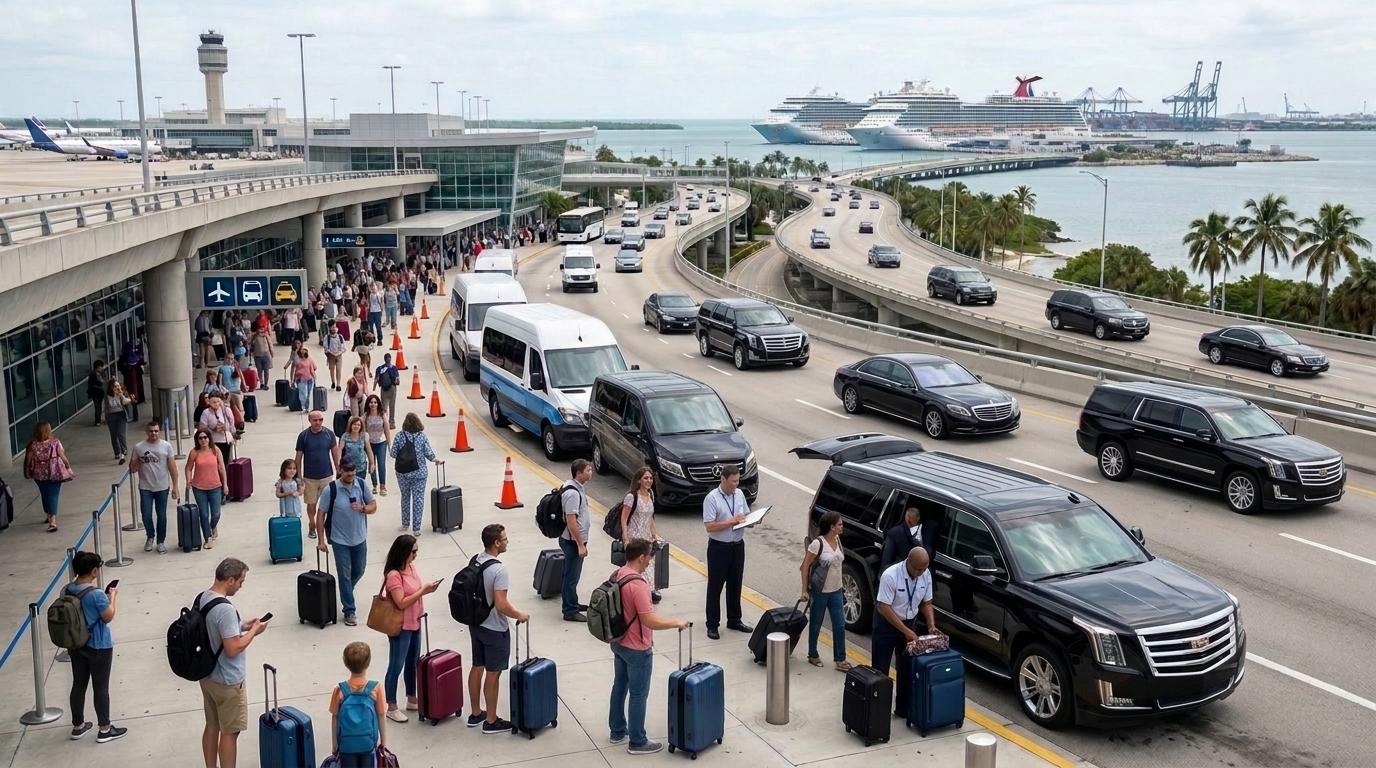
Your cruise vacation doesn't start at the gangway. It starts when your plane lands, and the stretch between baggage claim and the cruise terminal is where many trips get stressful. Choosing the right airport to cruise port transfer decides whether you reach check-in relaxed or sweating over a missed boarding window. Some ports sit a few miles from the airport, and others are an hour or more away. The options range from cruise line motorcoaches to rideshare apps to private cars waiting at arrivals, and each one handles luggage, timing, and delays differently. This guide covers how each option works, when to schedule your ride, and how to choose the one that suits your group.
What an Airport to Cruise Port Transfer Involves
On paper, the trip is simple: you get from the airport to the terminal where your ship is docked. In practice, a few details make it harder than an ordinary airport ride.
Cruise travelers usually carry more luggage than other travelers. A week at sea means formal outfits, swimwear, shore excursion gear, and often gifts or extra supplies for the kids. Many ports also have several terminals, and ships from different cruise lines can share a port on the same day. Your driver needs to drop you at the correct terminal, not just the port entrance.
Timing matters too. A regular airport ride can run late without much consequence, but a ship leaves on schedule. If you miss the all-aboard time, you'll have to catch up with the ship at the next port, at your own expense.
Choosing Your Airport to Cruise Port Transportation
Most travelers end up choosing among four options. Each one works, but they suit different kinds of travelers.
Cruise Line Transfers
Most major cruise lines sell their own airport cruise transfer, usually as an add-on during booking. These are typically shared motorcoaches that leave from a set meeting point at the airport. They're convenient because the cruise line coordinates them, but they run on the line's schedule, not yours. You may wait at the airport until the coach fills up or until the scheduled departure, and that wait can be long if your flight lands early. Per-person pricing also adds up quickly for families.
Shared Shuttles
Independent airport to cruise port shuttle services work much like the cruise line coaches. They're usually cheaper, but you share the ride with other passengers, and the van may stop at more than one terminal or hotel along the way. Shuttles suit solo travelers and couples with light luggage who don't mind some waiting.
Taxis and Rideshare
At ports close to the airport, a taxi or rideshare can be a reasonable choice. The downsides show up on busy cruise days. Demand rises sharply when several ships turn over at once, and app-based rides may cost more during these peaks. You also can't be sure the car that arrives will hold four adults and eight suitcases. Some terminals have assigned rideshare pickup zones that are hard to find while you're managing bags.
Private Car Service
A private transfer is a car, SUV, or van booked for your group alone. The driver meets you at arrivals, loads your luggage, and drives straight to your terminal. You pay one price for the vehicle, not per passenger, so private transfers often cost about the same as shuttle seats for families and groups. This is the option that keeps the most control in your hands.
Why Private Airport Cruise Transportation Makes Sense
Embarkation day is more stressful than most of the trip, and a private ride removes several of the usual worries.
Delays are the most common one. Many private transfer providers track your flight, so if your plane lands late, your driver adjusts instead of leaving without you. A shared coach scheduled for a fixed time can't do that.
Space is the second. When you book a private vehicle, you choose its size to fit your group and luggage. A family of five with a stroller and large suitcases can book a van that fits everything instead of hoping a sedan shows up.
Then there's the route itself. A private airport to cruise terminal transfer goes from the curb to your terminal with no stops for other passengers. On longer routes, such as Orlando to Port Canaveral or Houston to Galveston, this can save a lot of time.
Private transfers also suit travelers who need extra help: older passengers, people with limited mobility, parents with young children, and anyone who doesn't want to haul bags through a crowded pickup area. If you're comparing options for a specific port, you can browse cruise port transfers by destination to see which vehicles and routes are available.
When to Schedule Your Transfer
Getting the timing right matters as much as choosing the right vehicle.
Fly In the Day Before
This is the most common advice from experienced cruisers, and it's sound. Flight delays and cancellations happen, especially in winter or during hurricane season in Florida and the Gulf. Arriving the night before gives you a buffer. You can stay at a hotel near the airport or port and book a short morning transfer to the terminal.
If You're Flying In the Same Day
Leave as much margin as you can. Most cruise lines give each passenger a boarding window, and check-in typically closes an hour or more before departure. Your cruise documents list the exact cutoff. Choose an early flight, and book a transfer that tracks your flight so a delay doesn't leave you scrambling for a ride.
On Disembarkation Day
The return trip needs planning too. Ships usually dock early in the morning, but getting through debarkation and customs takes time, and on a busy morning it can take longer than expected. Many travelers book flights no earlier than late morning or early afternoon for this reason. A private car booked for a set time spares you the long rideshare lines that form outside terminals as thousands of passengers leave at once.
Common US Airport to Cruise Terminal Routes
Distance changes what you need from a transfer. Here's a general look at some popular departure ports:
|
Airport |
Cruise Port |
Approximate Distance |
|
Fort Lauderdale (FLL) |
Port Everglades |
About 2–3 miles |
|
Miami (MIA) |
PortMiami |
About 8–10 miles |
|
Orlando (MCO) |
Port Canaveral |
About 45 miles |
|
Houston Hobby (HOU) |
Port of Galveston |
About 50 miles |
|
Houston Bush (IAH) |
Port of Galveston |
About 70+ miles |
|
Seattle-Tacoma (SEA) |
Seattle cruise terminals |
About 15–20 miles |
Drive times depend on traffic, especially around Miami and Houston. For the longer routes, such as Orlando and Houston, booking a private ride in advance is especially worthwhile, because a last-minute rideshare for 50 or more miles may be harder to find and costly.
Luggage, Kids, and Special Requests
Cruise luggage works differently than airline luggage. At most terminals, porters collect your large bags curbside, tag them, and deliver them to your cabin later in the day. Tipping porters is customary. Keep a carry-on with medications, travel documents, swimwear, and anything you'll want in the first few hours, because checked bags can take a while to arrive.
If you're traveling with young children, ask about car seats when you book. Many private transfer providers can arrange them with advance notice, while taxis and rideshares usually can't. The same goes for wheelchair-accessible vehicles or extra space for mobility equipment. Mention it early so the right vehicle is assigned.
How to Book an Airport to Cruise Port Transfer
Book once your flights are confirmed, ideally a few weeks before you sail. Have these details ready:
-
Your flight number and arrival time
-
Your cruise line, ship name, and departure terminal
-
The number of passengers and pieces of luggage
-
Any special needs, such as child seats or accessibility requirements
Platforms like Transpovia let you compare private vehicles, see the full price before you pay, and book the same kind of service you would for any other trip. If your travel plans include other legs, such as a hotel stay before the cruise or a ride home after it, you can arrange those airport transfers at the same time so the whole trip is set before you leave.
Frequently Asked Questions
Is a cruise line transfer better than booking a private one?
Not necessarily. Cruise line transfers are easy to add on, but they're shared, run on fixed schedules, and are priced per person. A private transfer goes on your timing, takes you straight to your terminal, and is often comparable in cost or cheaper for families and groups once you add up individual fares.
How early should I arrive at the cruise port?
Plan to arrive during your assigned boarding window, which your cruise line provides with your check-in documents. Arriving well before it usually means waiting in the terminal, while arriving close to the cutoff risks missing check-in. Aim for the start of your window so you have room for traffic or other delays.
What happens if my flight is delayed?
It depends on how you booked. Shared shuttles and cruise line coaches may leave on schedule without you. Many private transfer services track your flight and adjust pickup times when flights run late. If a delay could cause you to miss embarkation, contact your cruise line right away, as it can advise on options.
Conclusion
The ride from the airport to your ship is a short part of the trip, but it affects how the cruise begins. The right airport to cruise port transfer depends on your port's distance from the airport, your group size, how much luggage you carry, and how much flexibility you want if something goes wrong.
For couples traveling light at a port close to the airport, a taxi may be enough. For families, groups, longer routes, and anyone who wants a driver waiting when they land, a private transfer is usually the more dependable choice. Book early, share your flight details, and leave enough time before check-in closes, and embarkation day should go smoothly.
"Our flight landed forty minutes late, and the driver was still standing there with our name on a sign. The kids were in the van with all our bags in five minutes, and we got to the terminal before our boarding time even started."
— Danielle R., sailing from Port Canaveral with her family


