
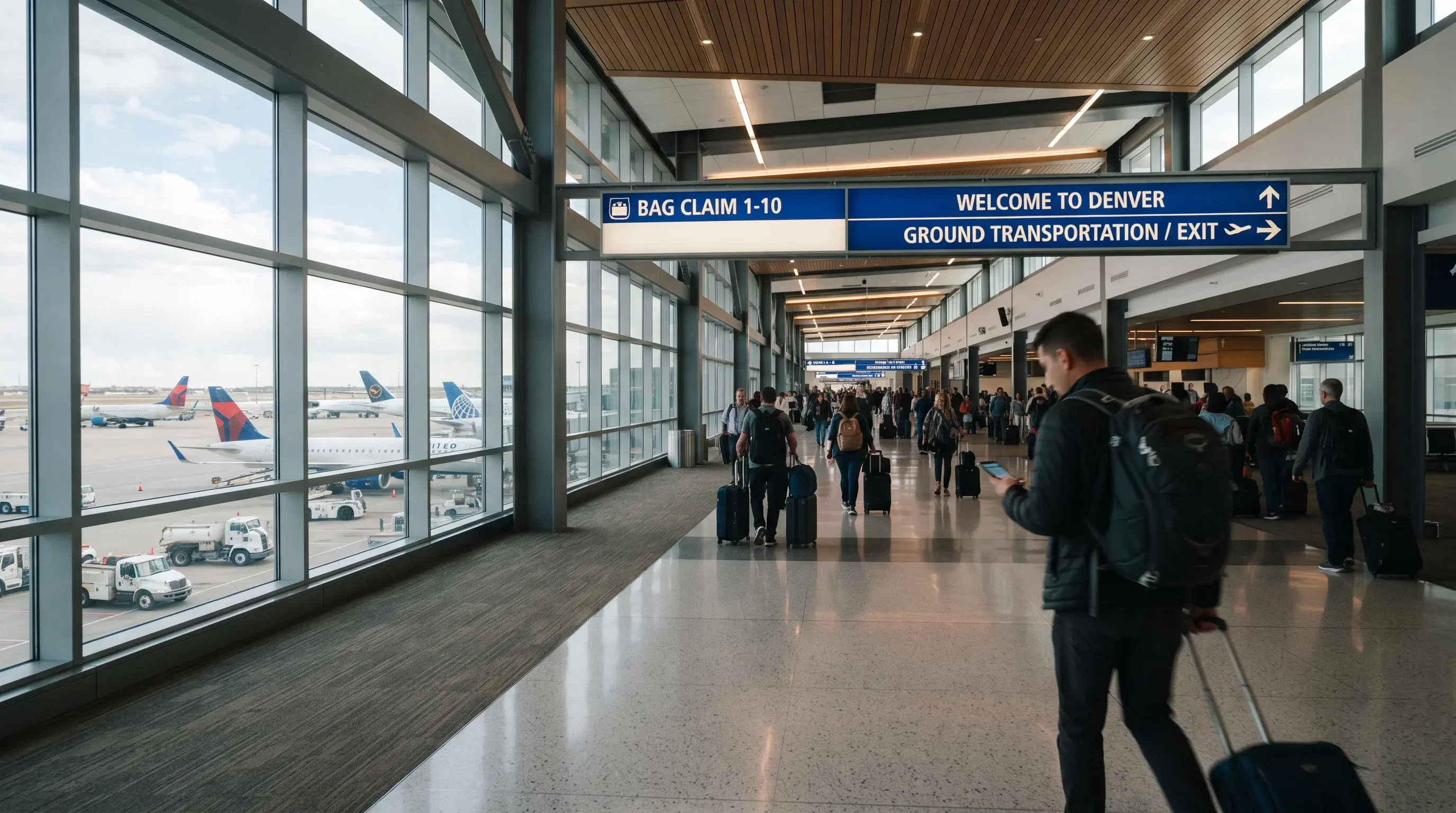
The moment your plane touches down, a new set of steps begins before you actually leave the airport. Many travelers, especially first-timers on an international trip, underestimate how long the airport arrival process can take or what order it follows. Knowing what happens after landing at an international airport—from deplaning to immigration, baggage claim, customs, and finally transportation—helps you plan connections, meetings, or hotel check-ins with realistic timing instead of guesswork.
The Airport Arrival Process, Step by Step
The international airport arrival process generally follows the same sequence everywhere, even though the exact terminology and technology differ by country. After deplaning, passengers move through immigration (also called passport control or border control), then collect checked baggage, then pass through customs, and finally exit into the public arrivals area. Connecting passengers typically follow a separate transfer path that may skip baggage claim entirely if bags are checked through to the final destination.
Total time from landing to exiting the terminal ranges from 20 minutes at a quiet regional airport to more than two hours at a major hub during peak periods. Immigration queues are usually the longest variable, followed by baggage delivery time.
Deplaning and Getting to the Terminal
After the aircraft parks at the gate, passengers exit through the jet bridge directly into the terminal. At airports where a jet bridge is not used, ground staff direct passengers onto a bus that drives to the terminal building, which adds several minutes. Signage at this point usually splits passengers into two paths: those continuing on a connecting flight, and those who have reached their final destination and need to clear immigration.
Long-haul international terminals are often large, so the walk from the gate to immigration can take 10 to 15 minutes on its own, particularly at airports with multiple concourses connected by trains or moving walkways.
Immigration and Passport Control
Immigration is the checkpoint where a government official or an automated system verifies a traveler's identity and legal right to enter the country. This is normally the first major line after leaving the gate area, and it separates into channels for citizens and residents versus foreign visitors.
Most countries offer one or more of the following options at this stage:
-
Manned counters, where an officer reviews the passport, asks questions about the trip, and stamps or scans the document
-
Automated passport control (APC) kiosks, which scan the passport and take a photo before printing a receipt to hand to an officer
-
E-gates, which use facial recognition or fingerprint matching against the passport chip and allow eligible travelers to pass without officer interaction
-
Trusted traveler programs, such as Global Entry in the United States, which let pre-approved, background-checked travelers use a dedicated kiosk or lane
Wait times vary widely depending on the number of arriving flights, staffing levels, and the time of day. Programs that let travelers submit passport and customs information in advance from a mobile app, such as the U.S. Customs and Border Protection Mobile Passport Control app, are available at dozens of international airports and several preclearance facilities abroad, giving eligible travelers access to a designated, faster-moving queue. Requirements differ by nationality and destination, so it is worth checking visa, e-visa, or electronic travel authorization rules before departure rather than assuming a stamp will be issued automatically on arrival.
Collecting Checked Baggage
Once cleared through immigration, passengers follow signage to the baggage claim hall. Screens near the entrance display which carousel corresponds to each flight number, and this information can also change if a flight is delayed or reassigned to a different belt.
Baggage typically starts appearing on the carousel 20 to 40 minutes after the aircraft parks, though this varies by airport size, the number of bags being unloaded, and whether ground staff are working multiple aircraft at once. If a bag does not arrive, the airline's baggage service office, usually located near the carousel area, handles missing or delayed luggage reports and can advise on delivery or reimbursement for essentials.
Travelers with tight onward connections or those heading straight to a hotel benefit from knowing this step in advance. Most advice on How Early Should You Arrive at the Airport focuses on departure, but arrival-side timing matters just as much when a tight layover or a pre-booked pickup is involved.
Customs Clearance
After collecting baggage, passengers proceed to customs, where officials enforce rules on what can be brought into the country and whether it must be declared. Most countries use a two-channel system:
|
Channel |
Who uses it |
What happens |
|
Green / nothing to declare |
Travelers with only personal items and goods under the duty-free allowance |
Usually walk through with no stop, subject to random checks |
|
Red / goods to declare |
Travelers carrying restricted items, amounts over the allowance, or commercial goods |
Bags may be inspected, and duties or taxes may apply |
Common items that require a declaration include large amounts of cash or monetary instruments, certain foods, plants, and animal products, tobacco above the allowance, and goods intended for resale. Rules and allowances differ by country and change periodically, so checking the destination's official customs authority website before travel is more reliable than relying on general assumptions. Some countries also require a separate agricultural or biosecurity inspection, particularly for produce, wood items, or outdoor gear that could carry seeds or soil.
What to Expect When Exiting the Terminal
Once through customs, the arrivals hall opens into a public area with signage for ground transportation, currency exchange, SIM card counters, and information desks. This is also where pre-arranged drivers typically wait with a name sign, and where taxi ranks, rideshare pickup points, train stations, and bus stops are usually indicated with clear directional signs.
Large international airports often place these transport options across different levels or a short walk from the terminal exit, so allowing extra time to locate the right pickup point—especially with luggage—helps avoid unnecessary stress after a long flight. Travelers who prearrange a private transfer through a service like Transpovia can skip the search for transportation entirely, since a driver is typically waiting at a designated meeting point inside or just outside the arrivals hall with flight tracking already accounted for delays.
Connecting Flights: A Different Path
Passengers with a connecting flight to another country usually do not collect baggage at the first stop if it was checked through to the final destination. Instead, signs direct connecting passengers to a separate security or transfer checkpoint, sometimes without needing to clear immigration for the arrival country at all.
However, if the itinerary involves entering the country before a later departure—common on layovers of many hours or overnight connections—travelers do need to clear immigration and customs like any other arriving passenger, then check in again for the next flight. Airline staff or transfer desk agents at the connecting airport can clarify which path applies to a specific ticket.
Common Mistakes That Slow Down Arrival
A few avoidable errors add unnecessary time to the airport arrival process:
-
Filling out a customs declaration form incorrectly or leaving required fields blank, which sends travelers to a manual review line
-
Not knowing the destination's visa or entry requirements in advance, which can result in additional questioning or paperwork at the counter
-
Packing agricultural items, such as fresh fruit or seeds, without expecting an inspection
-
Losing track of the baggage claim tag, which is sometimes requested when a large or unusual item is collected
-
Arriving without local currency or a working payment method for transportation, forcing a stop at a currency exchange before leaving
Frequently Asked Questions
How long does it take to get through an international airport after landing?
It depends heavily on the airport, time of day, and immigration staffing, but a realistic range is 45 minutes to over two hours from landing to exiting the terminal, including deplaning, immigration, baggage claim, and customs.
Do I need to go through customs if I have nothing to declare?
Yes. Every arriving passenger passes through the customs area, but those with nothing to declare and no restricted items typically use the green channel and are not stopped unless selected for a random check.
What happens if my checked bag doesn't arrive?
Report it immediately at the airline's baggage service desk near the carousel, keep the claim tag and boarding pass, and ask about delivery options or reimbursement for essential items while the bag is located.
Can I skip immigration if I'm only connecting to another flight?
Only if the connection stays within the same country's international transit area and the airline has checked your bag through to the final destination. Long layovers or itineraries that require re-entering the country still involve immigration and customs.
Getting Out of the Airport Smoothly
The airport arrival process moves in a predictable order—deplaning, immigration, baggage claim, customs, then ground transportation—but the time each step takes depends on the airport and the day. Checking entry requirements and customs rules before departure, and arranging transportation in advance, removes two of the biggest sources of delay once the plane lands.


